▸ virtual environments
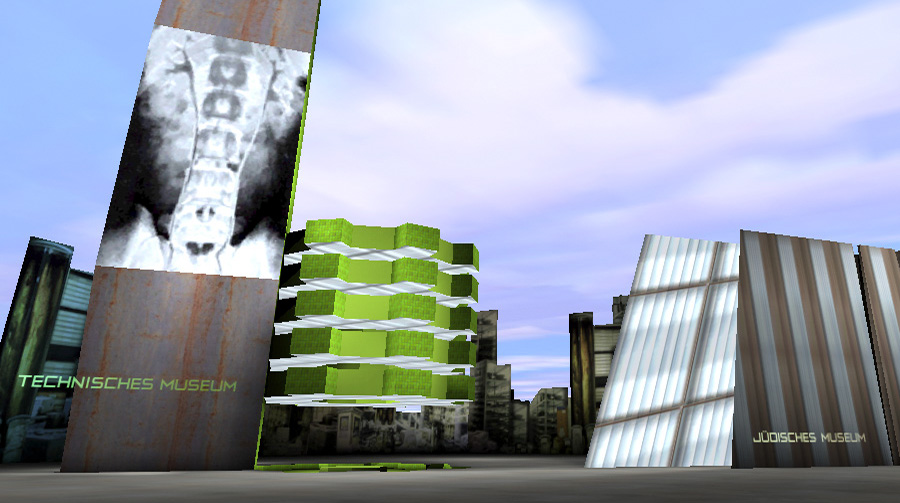
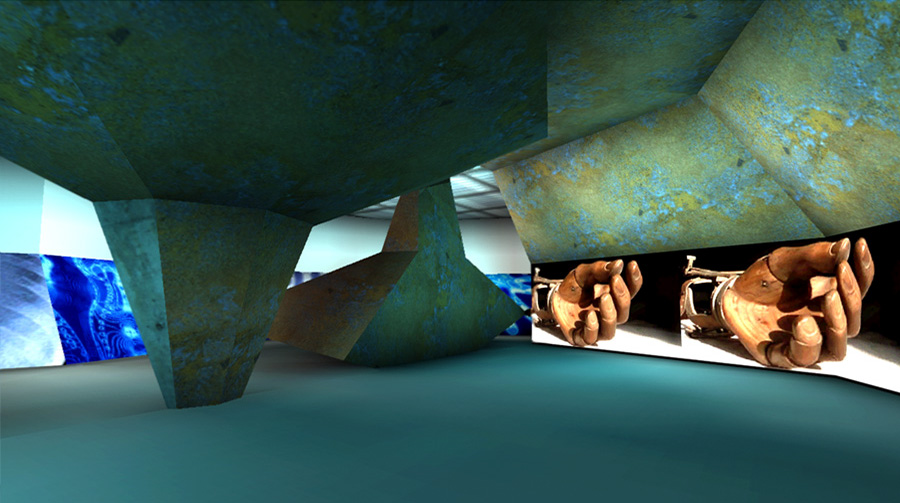
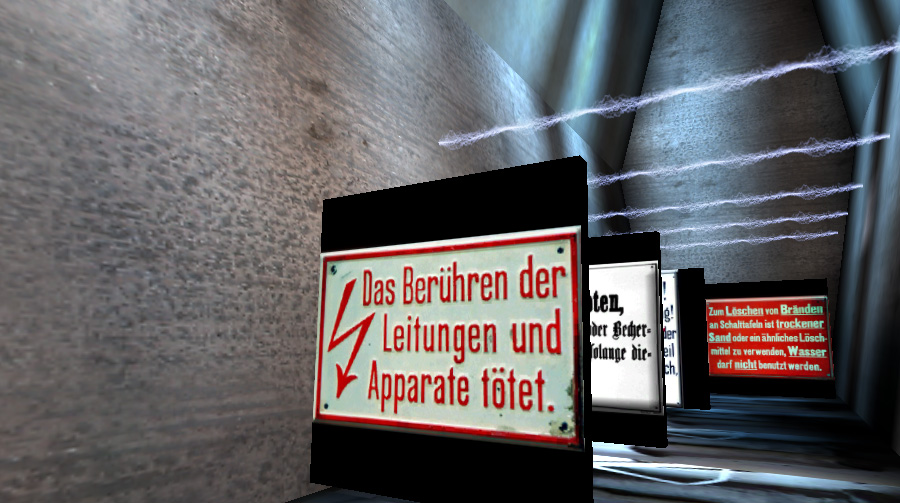
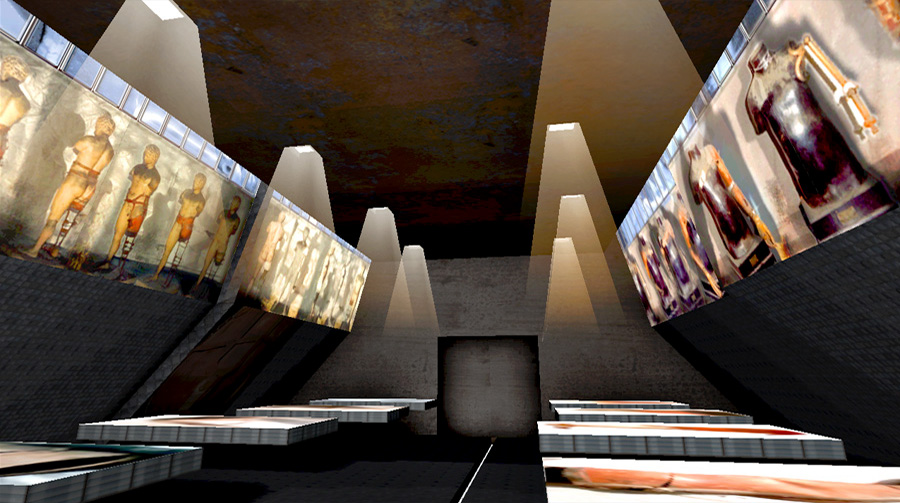
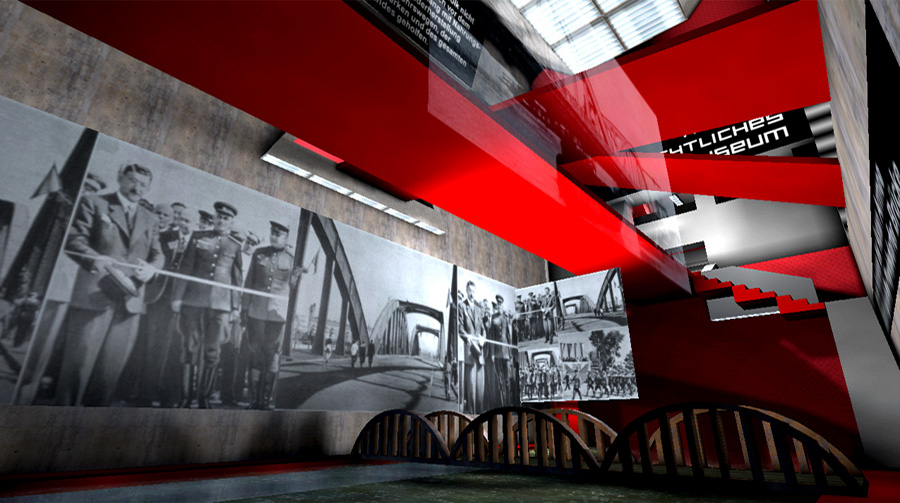
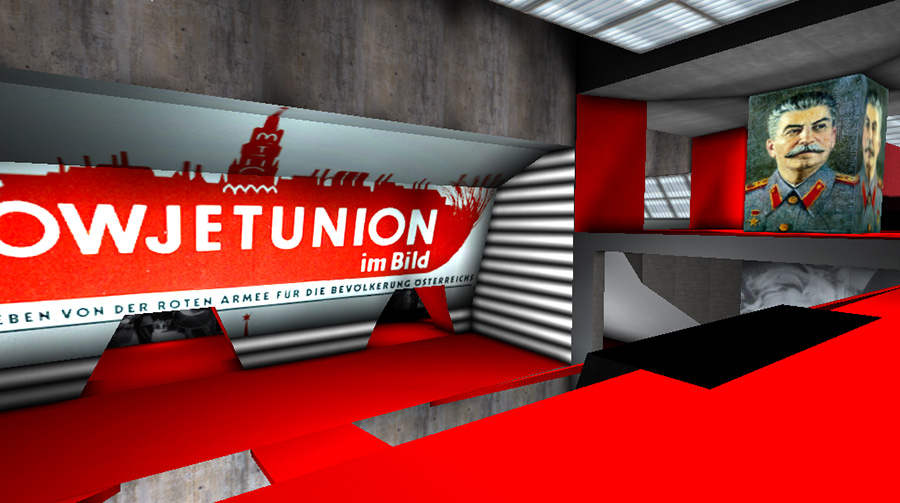
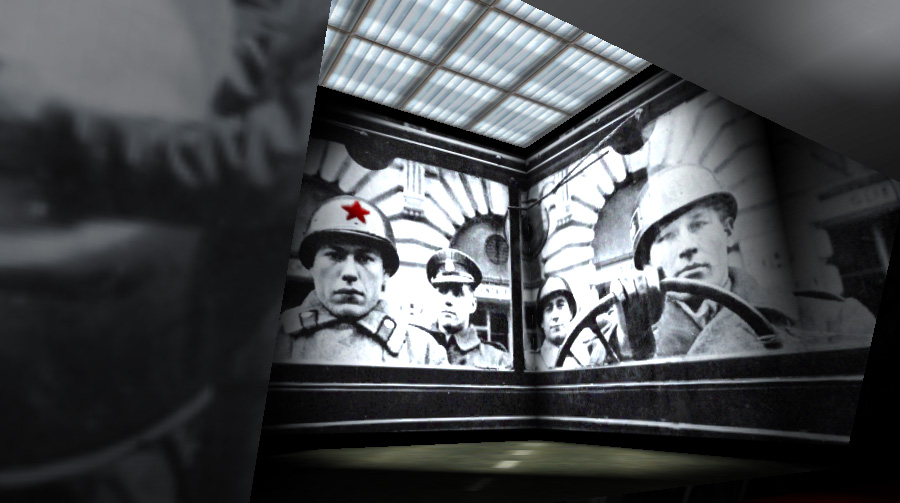
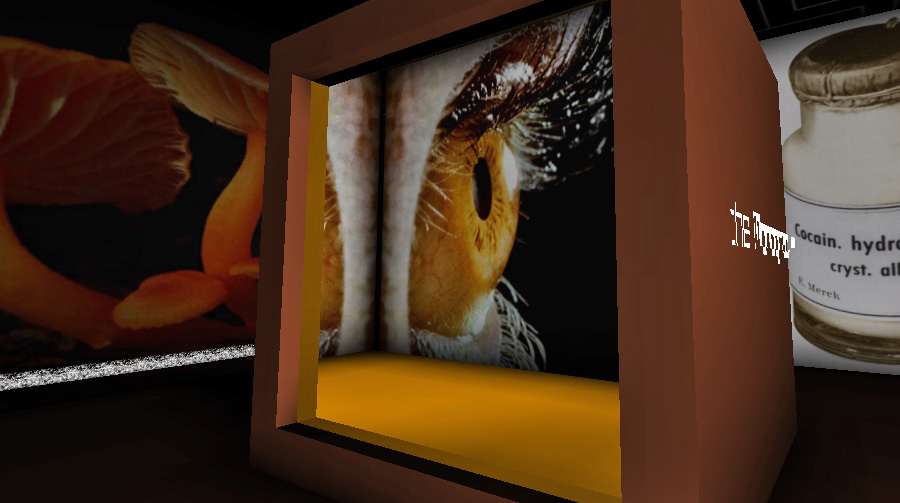
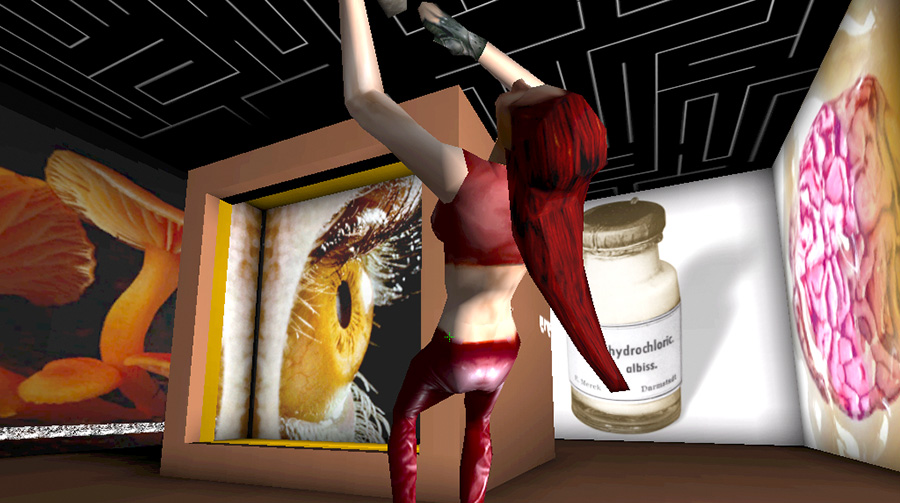

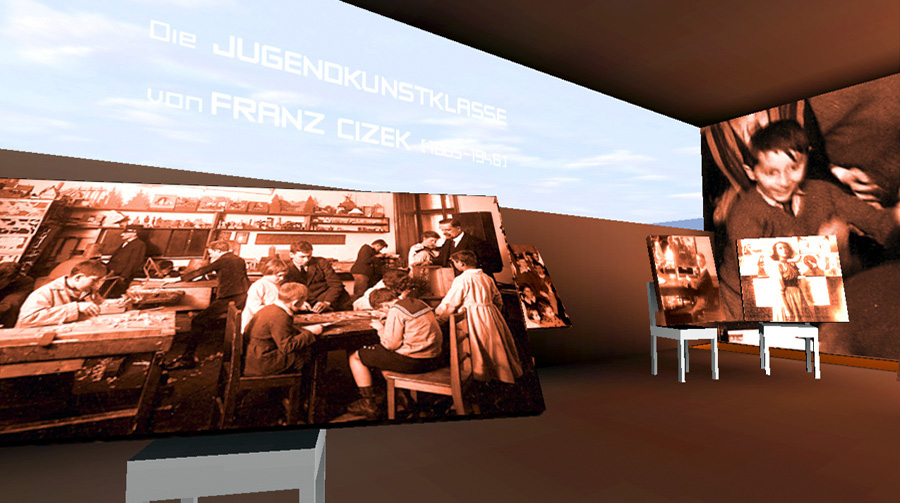
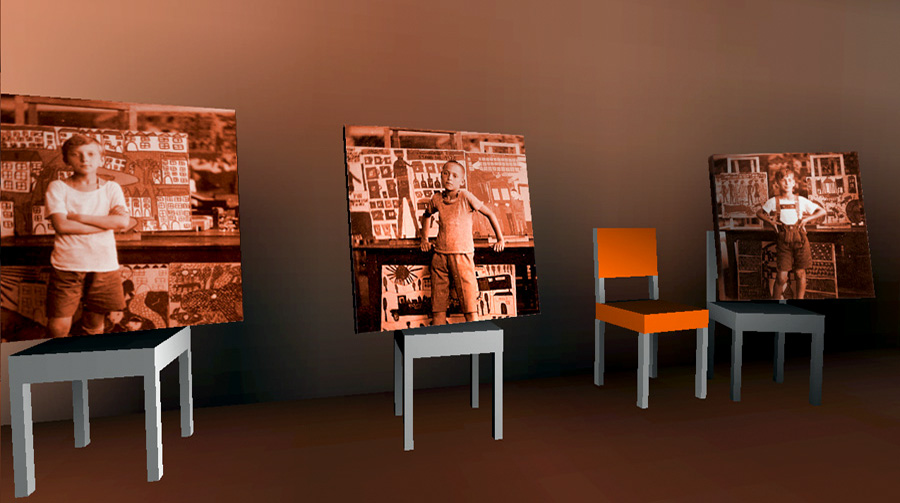
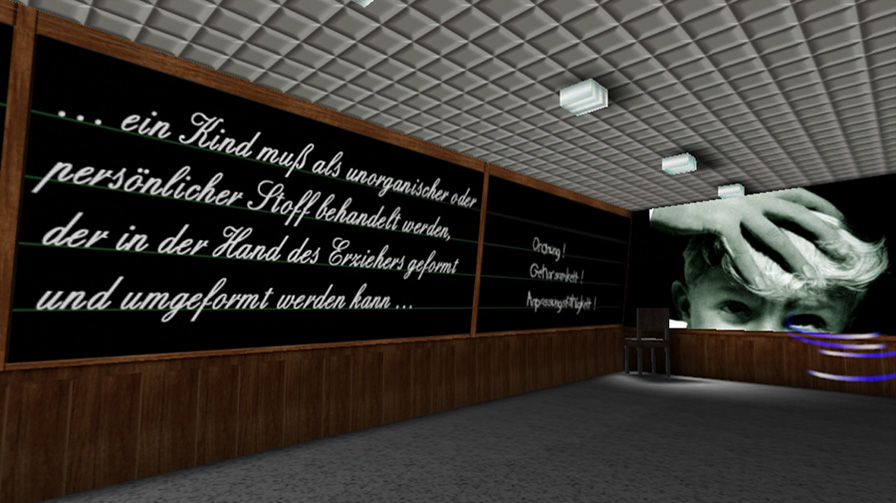
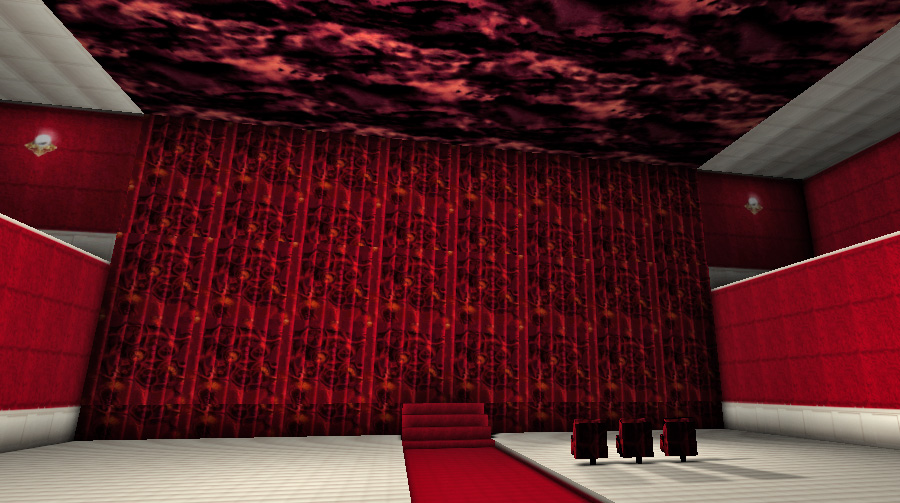

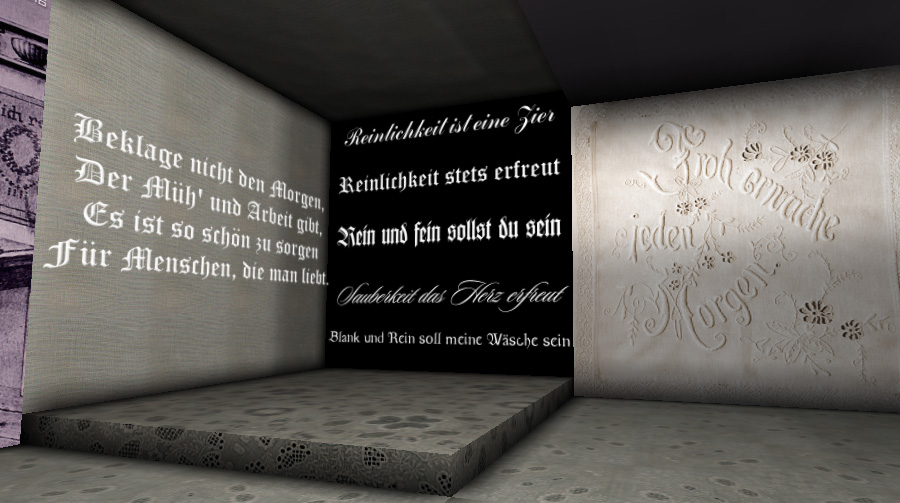
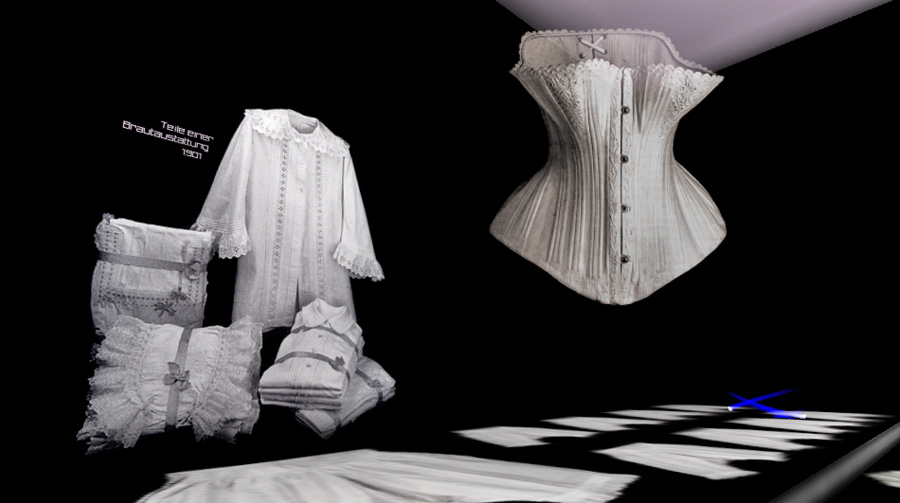

EXPOSITUR, 2001, interactive installation, still images
EXPOSITUR
— a virtual knowledge space
Unreal GameMod by Sylvia Eckermann and Mathias Fuchs, 2001 In constructing a virtual museum we changed, the logical structure and the aesthetics of a museum from scratch. We wanted to build a museum maze, a crossword puzzle of objects and stories, an audio-visual "Wunderkammer" and a hyper museum based upon a computer game.
For this collaborative project with 10 Viennese museums* we developed a semantic matrix for a cross-disciplinary exhibition showing items from different collections (Sigmund Freud Museum, Jewish Museum, Museum of Natural History...). The content provided by these museums had to be made accessible and comprehensible to users of different ages, educational backgrounds and computer literacy. We developed a system of connotations amongst the objects, which then was translated into a spatial structure of rooms, corridors and places of different sizes, shapes, remotenesses or proximities. The viewer/listener of our knowledge space explores a semantic structure by navigating virtual spaces with the topics being contained in these rooms. The connecting architecture between these rooms resembles staircases, passages, elevators, hidden doors or portals, each of them referring to the nature of the connotation. Quite contrary to web-based databases and hypertext structures, the links therefore possess a quality of their own, carrying much more information than just "is connected with".
The concept for our computer-aided knowledge space is related to techniques of Mnemosyne, used by Greek "singers" (Simonides of Cheos) and philosophers as well as Renaissance scholars. This form of mnemotechnique, called loci or place method, was widely used by orators to memorize complete speeches. The orator picked a building and learned every nook and cranny very intensely until he was able to move about the building in his memory. As a preparation for the speech a plethora of items of different complexity and amount of detail could be placed in the memorized rooms, e.g. a scale for justice etc. While delivering the speech the orator wandered from room to room and collected the hints while the speech unfolded.
Obviously the urban structure of the mnemotic system helped in keeping a sense of orientation amongst the rather abstract items under investigation. That is why urban metaphors and architectural metaphors were so popular with medieval mnemotechniques. In another respect our computer aided knowledge space also adopts techniques developed by Aby Warburg for his research on the visual codes of Renaissance art. Warburg’s scientific method consisted of connecting seemingly unrelated imagery to gain insight into visual similarities and connotations, which he called Pathosformeln. In our knowledge space the multiple coding of meanings contained with the exhibited objects is made transparent by the spatial relation superimposed upon the objects. (A technical drawing of a prosthesis, e.g., is positioned close to Freud’s Prothesengott quote and therefore connected to Freud’s theory from Das Unbehagen in der Kultur. The latter might lead to beautifully painted transportation vehicles from Pakistan which have been supplied to us by the Museum of Anthropology.)
To navigate the spaces of different content the users have to keep moving. They can walk, run, climb, jump, crouch, swim or fly according to the spatial situation. The Frankfurt based cultural scientist Manfred Fassler has mentioned in his recent publication that the etymological root of the German word for experience (Erfahrung) stems from fahren , i.e. "to move". We consider the process of actively exploring a quasi-spatial structure as the key mechanism for creating a semantic structure that is neither linear nor hierarchical. We consider the technology of a computer game as a helpful tool for the mediation of complex content. We also consider the freedom of the user to go his or her own way in the virtual environment as an important feature that allows for individually shaped relational networks inside a complex field of knowledge.
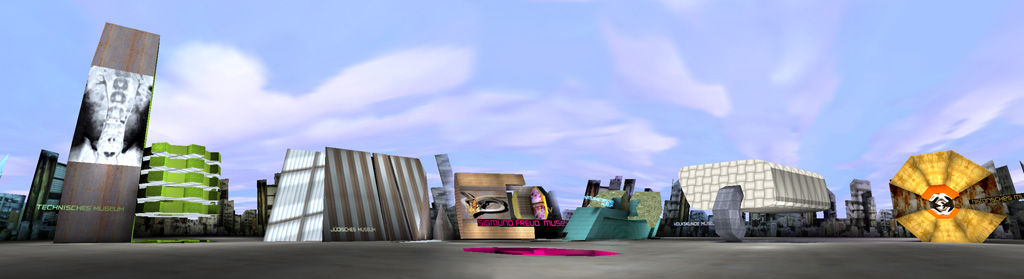
EXPOSITUR, 2001, still image
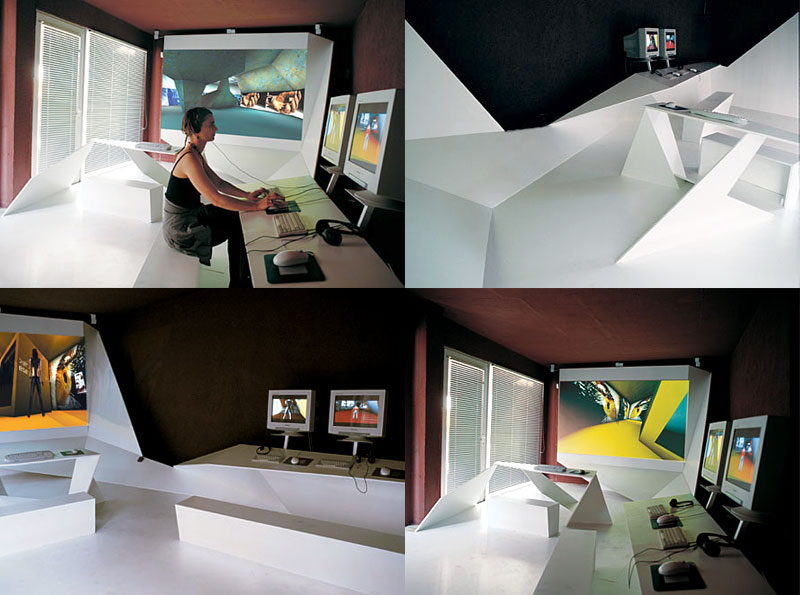
EXPOSITUR, 2001, installation view, Vienna.
Credits:
Unreal GameMod by Sylvia Eckermann and Mathias Fuchs.
text and german voiceover: Ferdinand Schmatz, additional UNREAL scripting: Christopher Lindinger, additional 3D objects: Jürgen Hagler and Werner Pötzelberger, player skins: Philipp Brunner and Ngoc Nguyen, video stills: Ruth Kaaserer, translations: Rosemary Mackenzie, Andrew Bentley, Leena Bentley; Finnish voiceovers: Leena Bentley, English voiceovers: Andrew Bentley
Exhibition architecture in Vienna: tnE Architects (MT. Harnoncourt, E.J. Fuchs)
Collaborating Museums: Naturhistorisches Museum Wien (Ernst Mikschi), Jüdisches Museum Wien (Werner Hanak), Technisches Museum Wien (Hubert Weitensfelder), Österreichisches Museum für Volkskunde (Kathrin Pallestrang), Historisches Museum der Stadt Wien (Rolf Laven), Heeresgeschichtliches Museum im Arsenal (Manfried Rauchensteiner), Museum für Völkerkunde (Axel Steinmann), Sigmund Freud-Museum (Alexandre Métraux), Museum Moderner Kunst Stiftung Ludwig Wien (Rainer Fuchs), Öster. Theatermuseum (Agnes Pistorius).
VENUES:
- Expositur, the interactiv knowledge game was part of the show: "Unternehmen Capricorn. Eine Expedition durch Museen im Karmeliterviertel" by Christoph Steinbrener, Karmelitermarkt, Vienna AT, 2001.
- KIASMA Museum of Contemporary Art, curated by Perttu Rastas, Helsinki FI, 2002.
EXPOSITUR - a virtual knowledge space was supported by:
Bundeskanzleramt - Kunstsektion, Bundesministerium für Innovation und Technologie. Thanks to: Perttu Rastas, KIASMA media curator Petri Ryöppy, Esa Niiniranta, Simo Pirinen, KIASMA technical support
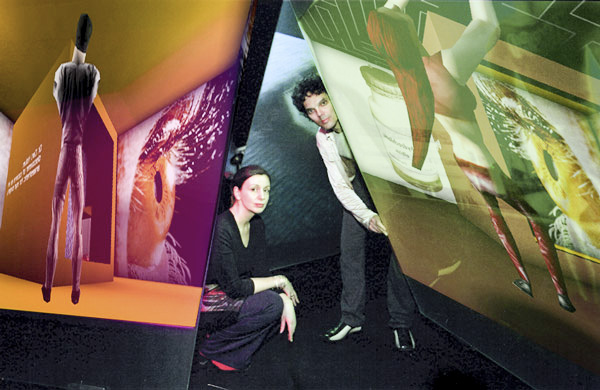
EXPOSITUR, 2001, interactive installation, installation view, KIASMA, Helsinki FI. Sylvia Eckermann, Mathias Fuchs