upcoming:
EXHIBITION
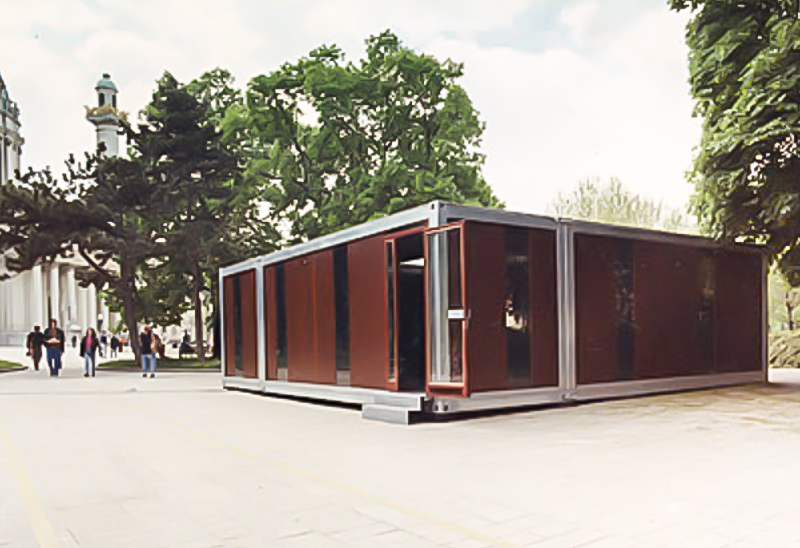
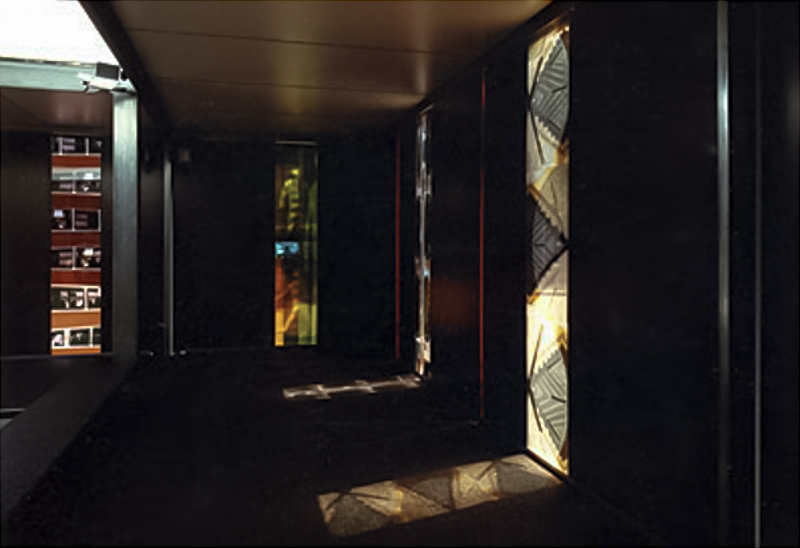
An Asana Moment, curated by Raz Samira
- The Rothschild Center, MUZA - Eretz Israel Museum
Running: 29 March – 01 June 2024
The Future of Demonstration S4
Like a Ray in Search of its Mirror
a mixed-reality art project bySylvia Eckermann and Gerald Nestler
Immersed in planetary matter a new world is unfolding.
Can you already feel the ecstatic sensation of alien copresence?
–donaufestival. Forum Frohner, Krems, Austria.
Performance and Livestream: April 19, 2024, 18:00 CET
(16:00 UTC / 12:00 EST / 10:00 MDT / 01:00+1 KST)
Exhibition: April 20-28, 2024
Credits
PARTICIPANTS
Marian Kaiser, media theorist, dramaturge, author. Fahim Amir, philosopher. Martina De Dominicis & Alberto Cissello (debocs), performers. Giuliana Furci, mycologist [live from Santiago de Chile]. Daniela Gandorfer, law & governance scholar [live from London]. Thomas Nail, philosopher [live from Denver]. Agostino Nickl, architect, AI researcher. Patricia Reed, artist & theorist. Maggie Roberts (0rphan Drift), artist [live from London]. Yuka Takahashi, performer [live from Columbus]. A Waldrapp bird & Gordan Savičić, artist, & Felix Stalder, media theorist.
SOUND, MUSIC / VOCALS
Soulcat E-Phife, DJ/MC. Volkmar Klien, composer. Wientaler Dreigesang, vocal ensemble.
TEAM
Markus Passecker: head of XR production and Unity3D development. Marek Šimoník: Record3DS3 volumetric video sharing. Michael Loizenbauer: livestreaming. Alex Weber: camera. Bela Eckermann: technical structures. Daniel Hüttler: assistance and documentation. Maximilian Thoman: co-producer.
PARTNERS
donaufestival,
medien.kunst.tirol,
Latent Spaces. A Zurich University of the Arts research project,
Radical Matter. A PEEK-FWF-funded artistic research project,
./studio3. Institute for Experimental Architecture, University of Innsbruck.
Supported by:
BMKOES | Land Tirol | Bildrecht/ske | donaufestival
previous:
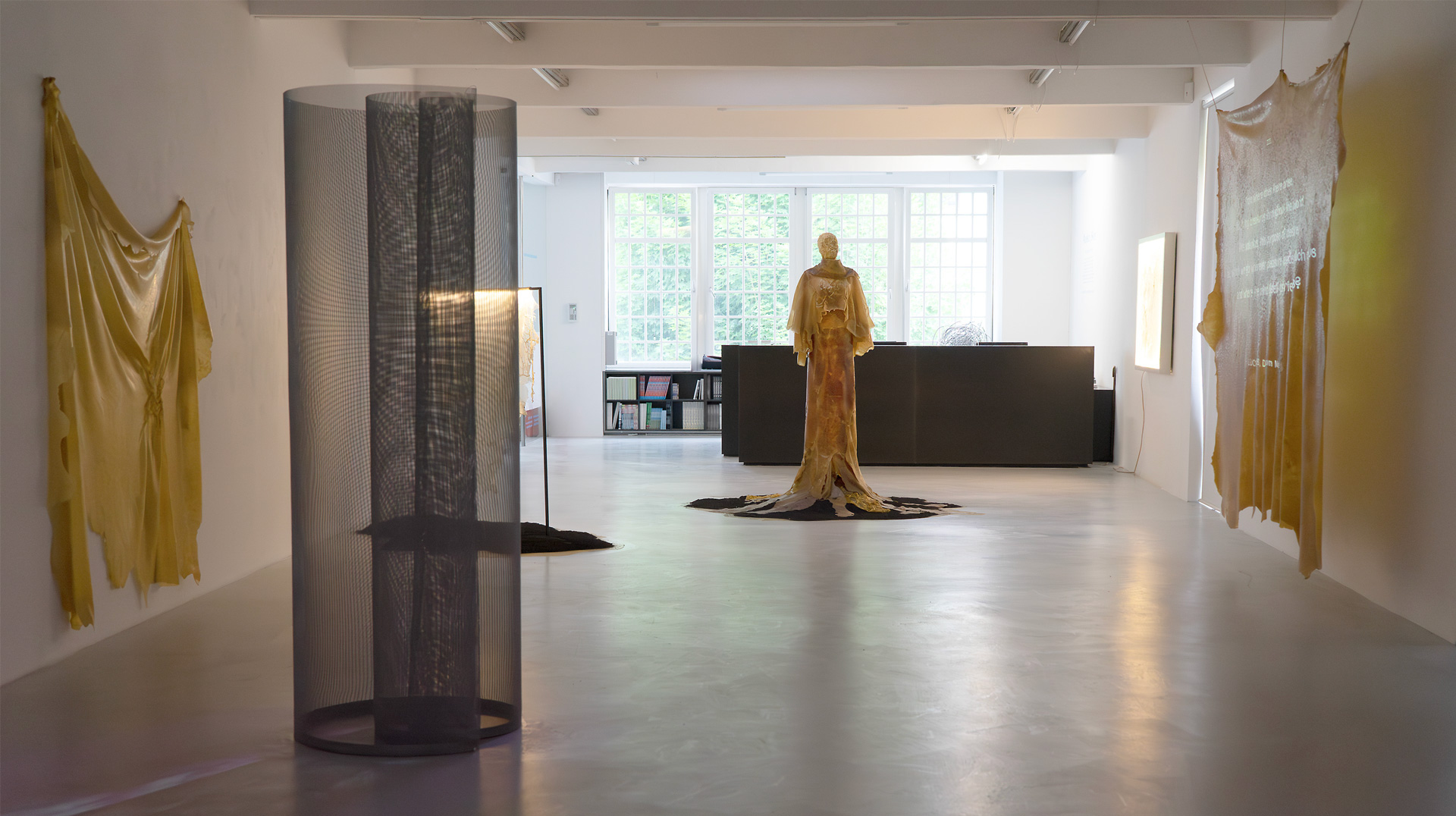
EXHIBITION ▸ radical ⇌ matter
When Materialism is No Longer Enough
- AIL Angewandte Interdisciplinary Lab
Opening: 25 Jan 2024, 18:00; Running: 26 Jan 2024 – 16 Feb 2024
The Future of Demonstration S3

▸ THE FUTURE OF DEMONSTRATION Season 3
- Galerie Klaus und Elisabeth Thoman
Heart of Noise Festival, Innsbruck
Performance: May 27, 2023 19:00
Exhibition: May 28 - June 3, 2023
Sylvia Eckermann / Gerald Nestler
Video
S T I L L A L I V E
▸ s t i l l a l i v e
Digital video, 2:58. 2022,
after John Carpenter's They Live
▸ FAKING THE REAL
22.09.2022-08.01.2023
Kunsthaus Graz.
Curated by:
Katrin Bucher Trantow, Sabine Kienzer.
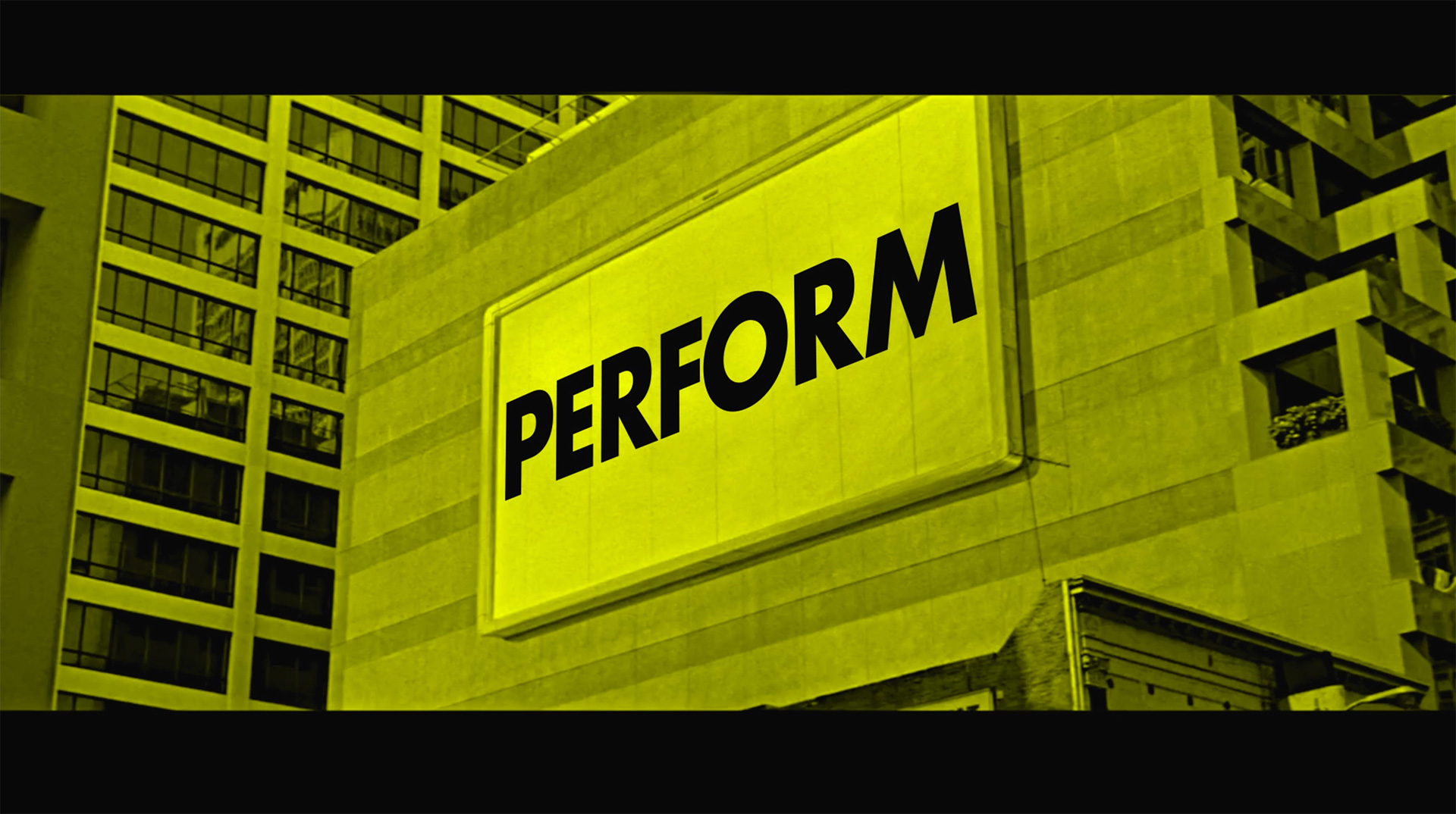
stillalive, still, Sylvia Eckermann
game for the public space
UNTER DER KURVE
▸ Under the curve is an artistic project by TECHNOPOLITICS. The game for the public space engages with how forecasts, statistics and forms of digital capture influence our everyday life and map our society. Funded by SHIFT, Basis Wien Kultur, 2021
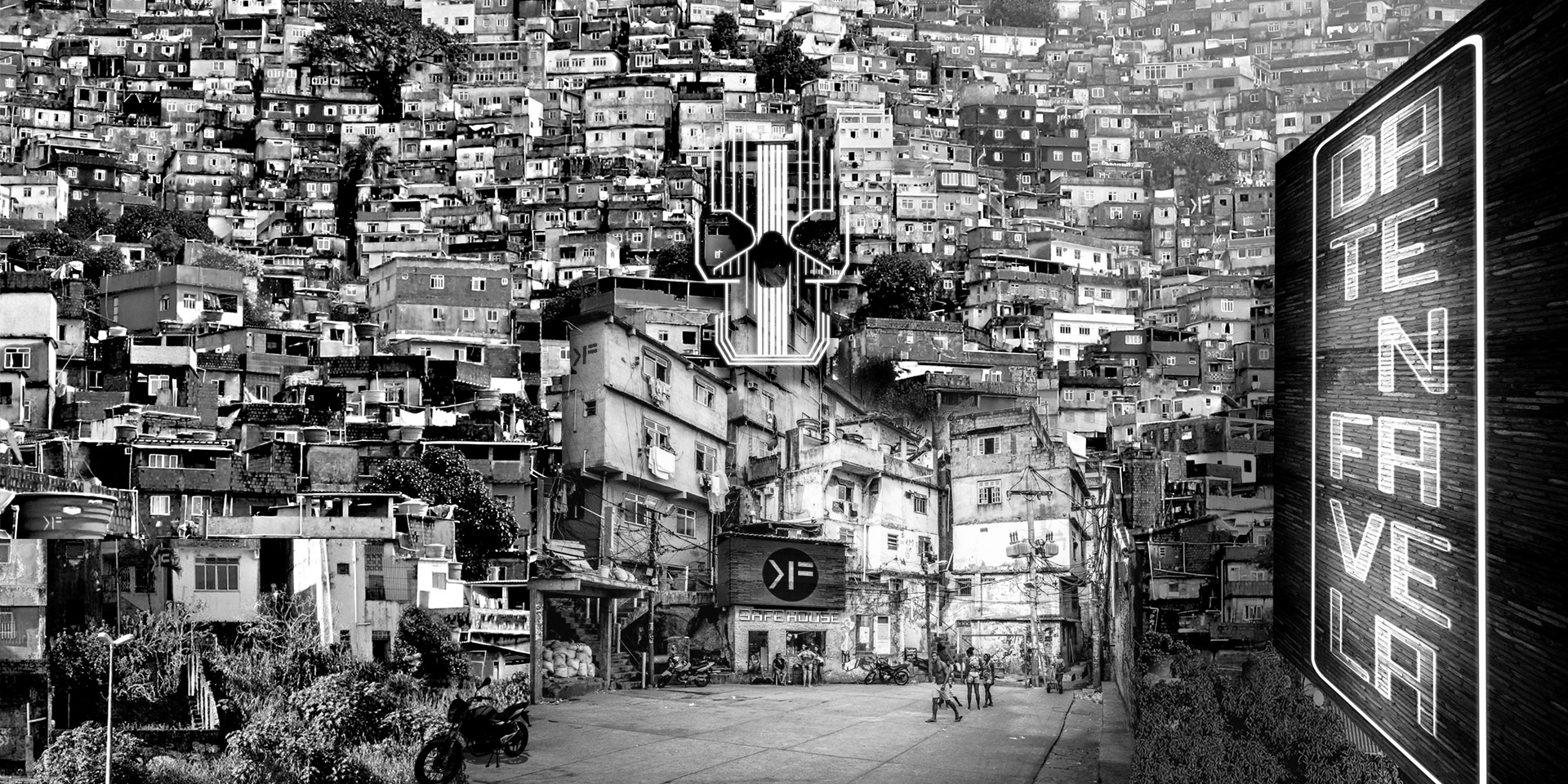
poster, under the curve, DATENFAVELA
Short film
Alles hat Grenzen NUR DER MONDFISCH NICHT
An environmental film musicalIdea, script, production, direction:
Sylvia Eckermann and Gerald Nestler.
ENGLISH / DCP 25fps / 1:1,85 / Stereo / 30'13'' / color / English subtitles. (completion date February 2021)
"Alles hat Grenzen, NUR DER MONDFISCH NICHT" is an environmental film musical, in which nature acts and speaks in a diversity of voices. Surfacing from micro- and macrocosmic layers, she resonates with water as the source of life and resounds as exploited resource. She echoes from the trenches of an inverted world and speaks out as a human being. Reverberating through ecological-cultural depths images, sounds and associations push to light, giving shape to a vision of humanity in tune with nature.
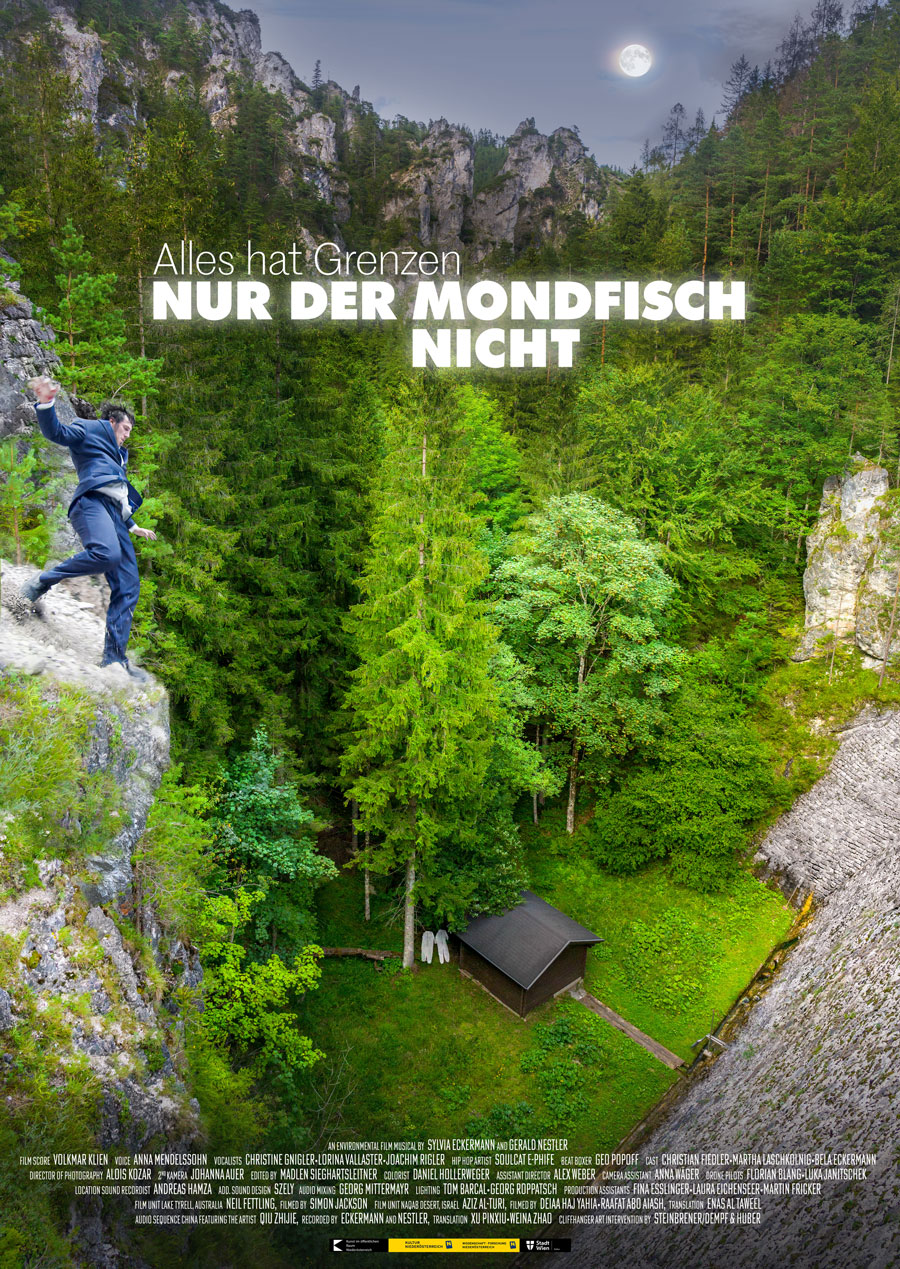
film poster
Credits
film score by: Volkmar Klien, voice: Anna Mendelssohn, vocalists: Christine Gnigler, Lorina Vallaster, Joachim Rigler, Hip Hop artist: Soulcat E-Phife, beatboxer: Geo Popoff, stuntman: Christian Fiedler, woman in red & acrobat: Martha Laschkolnig, man in the woods: Bela Eckermann.
director of photography: Alois Kozar, 2nd camera: Johanna Auer, edited by: Madlen Sieghartsleitner, assistant director: Alex Weber, camera assistant: Anna Wäger, drone pilots: Florian Blang, Luka Janitschek, lighting: Tom Barcal, Georg Roppatsch, location sound recordist: Andreas Hamza, production assistants: Fina Esslinger, Laura Eichenseer, Martin Fricker, sound design: Szely, re-recording mixer: Georg Mittermayr, colourist: Daniel Hollerweger.
film unit Naqab desert: Israel speaker of the unrecognised Aziz Al Turi, Arab Bedouin village of Al-Araqib filmed by Deiaa Haj Yahia, Raafat Abo Aiash, translation: Enas al Taweel. film unit Lake Tyrrell, Australia: narration by the artist Neil Fettling, filmed by Simon Jackson, audio sequence China: featuring the artist Qiu Zhijie, recorded by Eckermann/Nestler, translation: Xu Pinxiu, Weina Zhao, CLIFFHANGER art intervention by Steinbrener/Dempf & Huber, installation of artwork: Rope-Solutions, additional footage lifeat5k, LucasTJahn.
- BEST FIRST TIME DIRECTOR
- FIRST TIME DIRECTOR GOLD AWARD
- OUTSTANDING ACHIEVEMENT AWARD
- BEST SHORT NON FICTION FILM
- EXCELLENCE MERIT VISITOR’S IMPACT
- HONORABLE MENTION
- BEST SHORT NON FICTION FILM
- HONORARY MENTION INSPIRATIONAL FILM
Supported by: Kunst im öffentlichen Raum Niederösterreich, Kultur Niederösterreich, Wissenschaft Forschung Niederösterreich, Stadt Wien | Kultur.

Art in public space
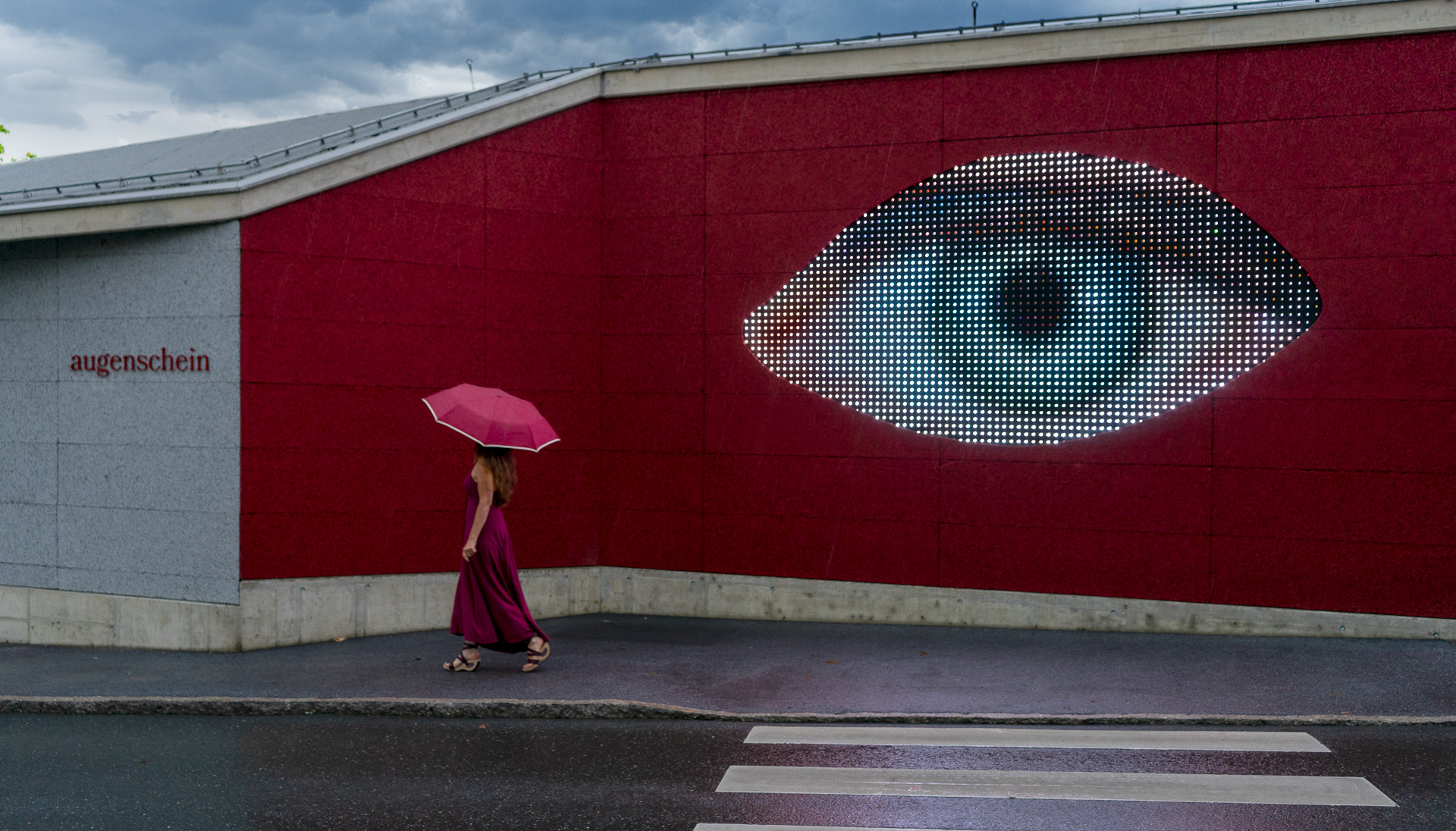
AUGENSCHEIN. installation view
Augenschein
Light installation for the public space
Permanent installation since 2020
Stieglerhaus,
Zentrum für Kunst, Kultur und Bildung
8511 St. Stefan ob Stainz 14.
▸ more
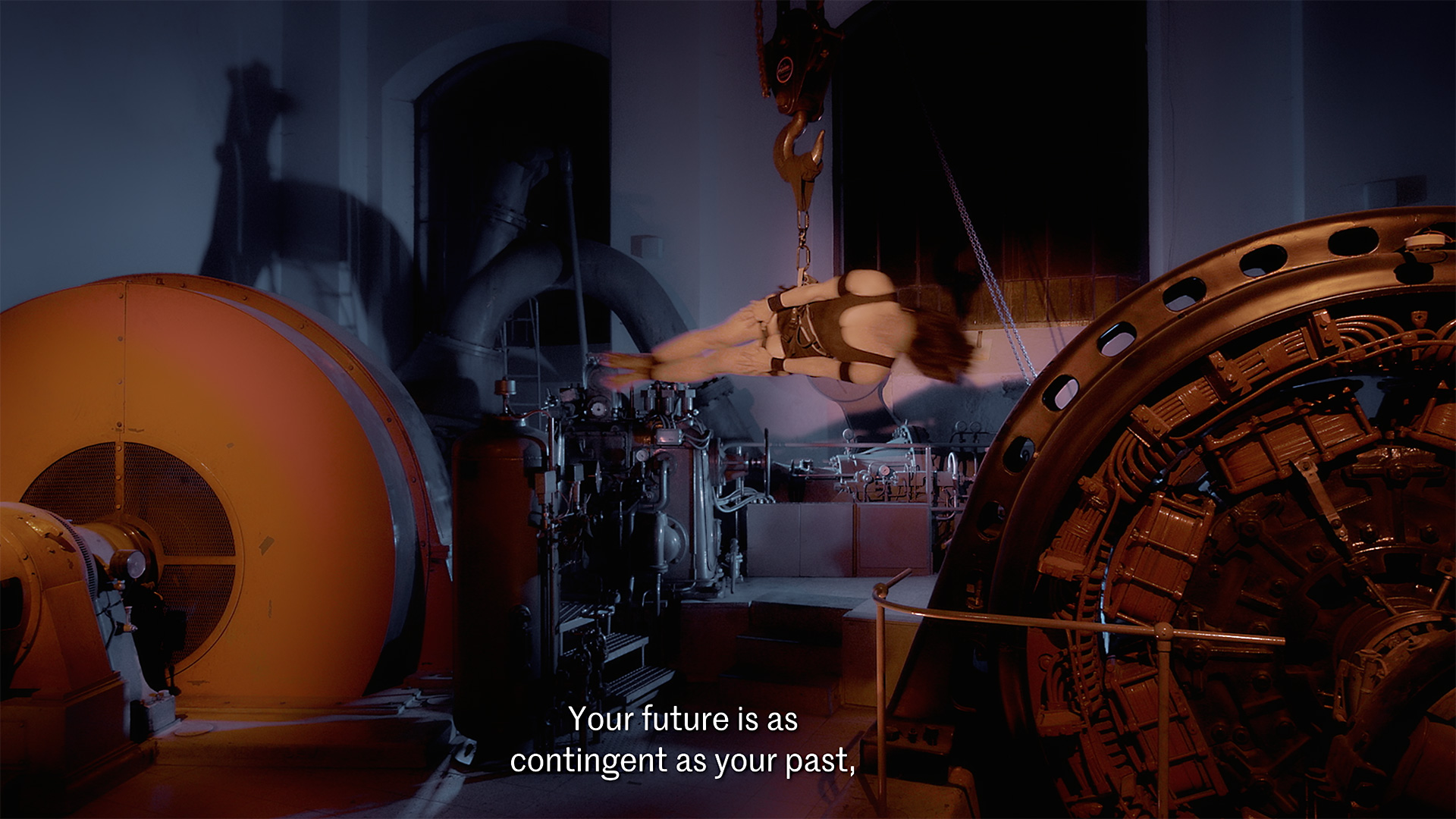
FEED, film still, 2021
FEED
8 cinematic performances.A public art project by
Sylvia Eckermann and Gerald Nestler
in connection with the art intervention Cliffhanger by Steinbrener/Dempf & Huber.
Ötschergräben, Lower Austria
Sep 18 2020 - Oct 2021
also shown at: Galerie Heike Strelow, Frankfurt am Main DE, 2021
▸ watch the films here
Space Intervention
DEEP HORIZON
The Culture of Forecasting
▸ 10 years of Technopolitics research group
Kunsthalle Wien Karlsplatz
17–19/10 2019
Forecasting is an eminently cultural issue, because it provides an aesthetic of the unknown and gives shape to the uncertain, actualizing the future into the present, in order to make the unlikely more likely, or to prevent the likely from happening. In talks, conversations, workshops and game playing, Deep Horizon: The Culture of Forecasting brought together the audience with artists, researchers and activists to deal with the role of forecasting as a way of inventing the future. Think and act ahead!
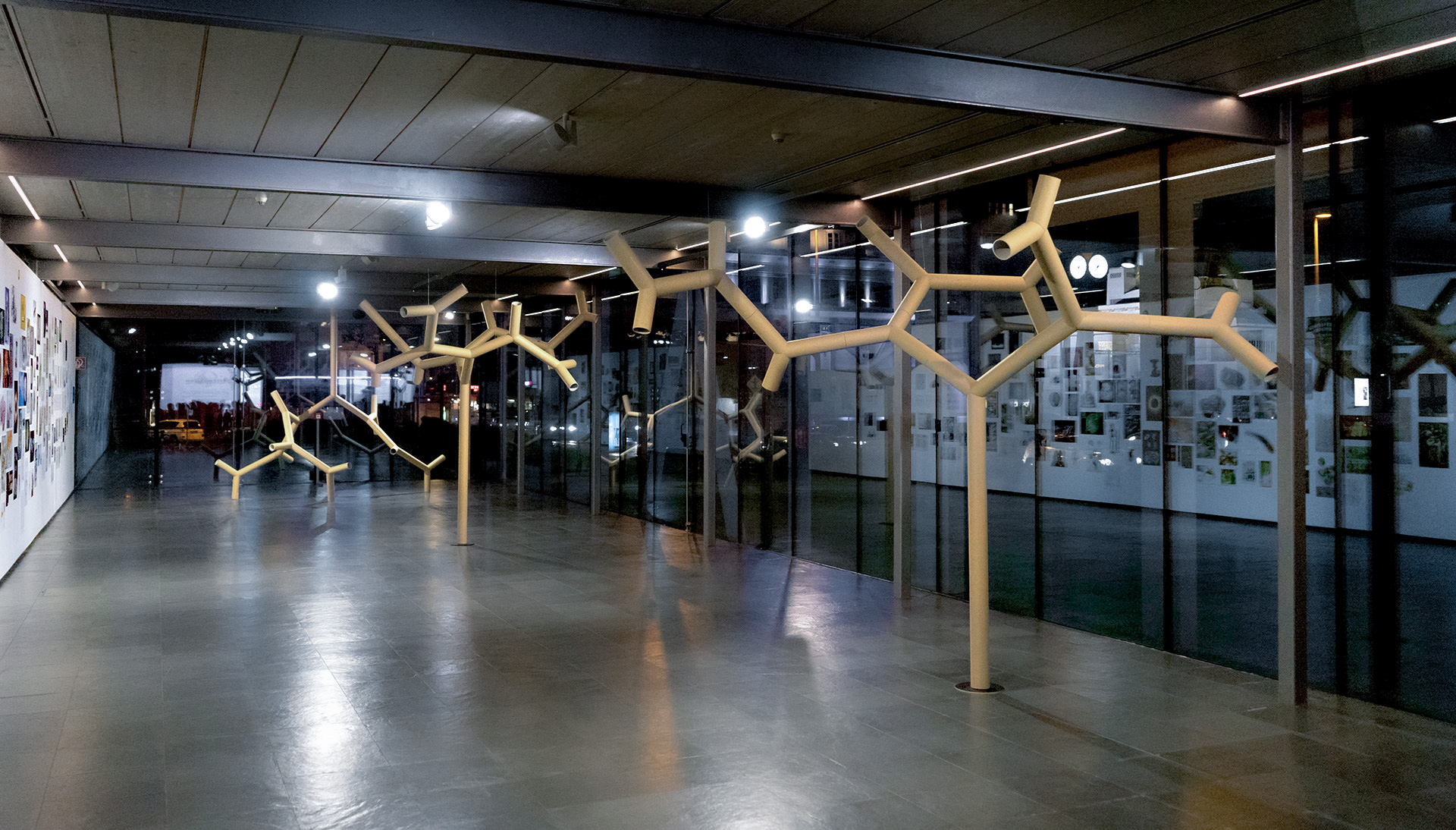
Sylvia Eckermann, "Random Forest" space interventon, installation view
video
a-symmetry-abstraction
Digital vertical video, 15min loop. 2018
TERMS & CONDITIONS.
TERMS & CONDITIONS. 1 channel video, 20 min loop. 2017
TOIOS
the video work by Sylvia Eckerman, translates the English title of the initiative and exhibition “The Other Is Oneself” to 35 other languages. These translations - realized in intense conversations with many friends and people from Vienna and all over the world - raise questions about how otherness is included, or lacking, in language and thus demonstrate the complex and multifaceted process of how meaning translates from one language to another. ▸ more
The Future of Demonstration S2 / Passion / Episode 3
MAKING THE BLACK BOX SPEAK
Towards a renegade aesthetics of resolution
THE FUTURE OF DEMONSTRATION
Season 2 PASSION Episode 3
October 24 2018, 8pm
Atelier Augarten, Vienna
▸ about / stream
▸ images
live stream, 24/10/2018
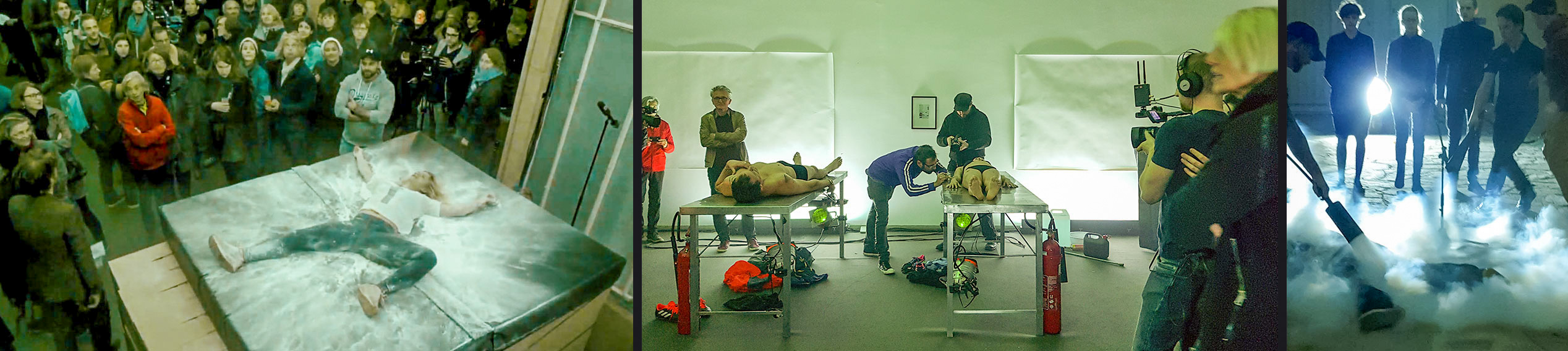
Episode Contributors:
Haim Bodek, Sylvia Eckermann, Maya Ganesh, Aldo Giannotti, Florentina Holzinger, Volkmar Klien, Gerald Nestler, Peng! Collective, Denis “Jaromil” Roio, Soulcat E-Phife, Technopolitics research group, UBERMORGEN (featuring Zenker and Stefan Endres).
Vocal Ensemble: Christine Gnigler, Lorina Vallaster, Joachim Rigler. Data Bodies: Jon Eckermann, Elisa Winkler.
Special Guest Appearance: Frank Pasquale.
art series
The Future of Demonstration
Season 1 | VERMÖGEN
31/10–11/11 2017
Reaktor, 1170 Vienna
Season 2 | PASSION
20–25/10 2018
Atelier Augarten, 1020 Vienna
Conseived by Sylvia Eckermann and Gerald Nestler with Maximilian Thoman.
The Future of Demonstration is an art series with two seasons and five episodes each. The episodes are based on thematic clusters derived from the leitmotifs, VERMÖGEN 2017 and PASSION 2018.
The art series engages with the radical changes we are witnessing today in the ecological, social, and cultural spheres. It explores the notion of demonstration and its political, technological, pedagogical, and aesthetic capacities as means to imagine, collect, weave, embrace and share narratives, techniques and affiliations of resistance.
Light installations
Vermögen
30/10-19/11 2017
–light installation for the LED facade of UNIQA headquarter in Vienna‘s city center.
The light installation was a widely visible landmark for the art series The Future of Demonstration S2 VERMÖGEN.
Escalator
19-25/10 2018
–light installation for the LED facade of UNIQA headquarter in Vienna‘s city center.
The light installation Escalator was a widely visible landmark for the art series The Future of Demonstration S2 PASSION.
Video
WHISPER. Status Code : No Entity Found
Video, audio, 4:49, 2016
Sylvia Eckermann: video, animation, sound. Gerald Nestler: words.
The video exposes the libidinal power of financial capitalism. In Gerald Nestler's lyrics, the market/money/capital addresses us directly. Its seductive speech is set to rhythm and sound by Sylvia Eckermann who also generated the visual surface. Computer voices strike up the digital hip hop of futures. Volatile swings define the imagery. We are the object of desire. Derivative markets constitute the "recombinant social DNA" of the social body. "Oh baby! How you nourish me!"
Technopolitics research group
▸ TECHNOPOLITICS
November 7 - 9 2018
SIGRADI 2018 TECHNOPOLITICAS
XXII International Conference
of the Iberoamerican Society of Digital Graphics.
Universidade de São Paulo. São Carlos. Brazil.
TECHNOPOLITICS presenting:
Tracing information society -
a Timeline
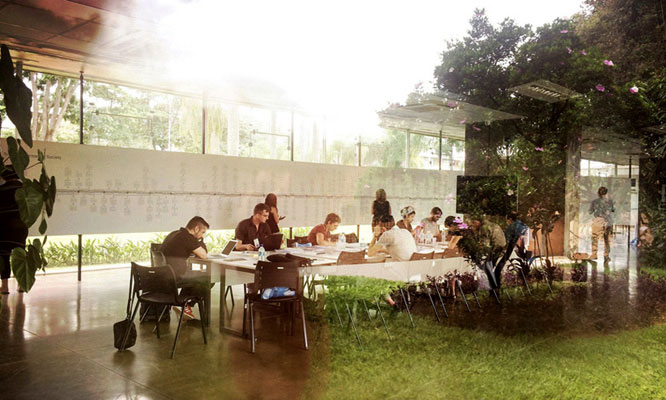
Timeline V.4, installation view, 20 x 1.5m
September 5 - November 18 2018
Seoul Mediacity Biennale
TECHNOPOLITICS was invited to take part in:
THE MONOSKOP EXHIBITION LIBRARY
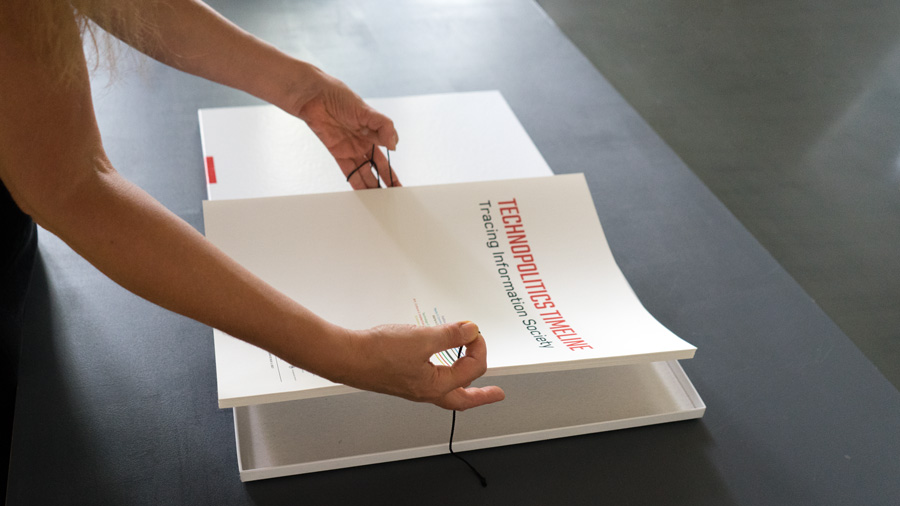
The MONOSKOP EXHIBITION LIBRARY explores the notion and medium of the art catalogue. The catalogue is the publishing vehicle of an exhibition and outlives the latter. But the imaginative power of this medium has more to offer than mere documentation. Hence, MONOSKOP invited artists, designers, curators, poets and researchers to explore the catalogue as an artistic medium. As our contribution, Technopolitics converted Tracing information society - a Timeline into an object-as-catalogue.
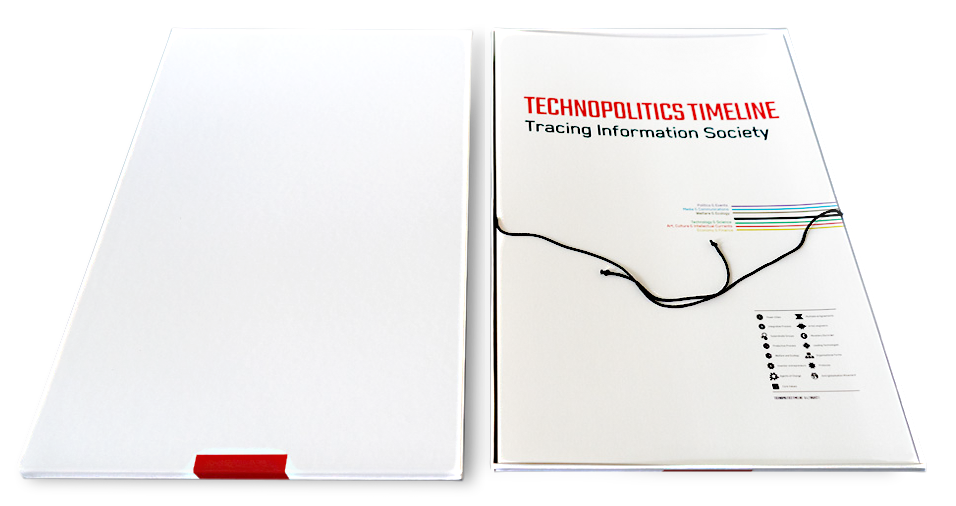
TECHNOPOLITICS TIMELINE V.4
Object 1. 460 x 48,3 cm
MEDIA Sculpture
Singularium
Interpassive object. 2015
Sound. Polystyrene sheets and mirrors, 4 loudspeakers, monitor, camera, computer, 160x160x80 cm.
Composition of the voices: Szely.
Wien Museum Collection / Sammlung Wien Museum
TEXT: Gerald Raunig: No Future - Dividuelle Linien, neue AkteurInnen der Kreativität SPRINGERIN 1/16
▸ BOOKLET with text contributions by Thomas Raab, Gerald Raunig.
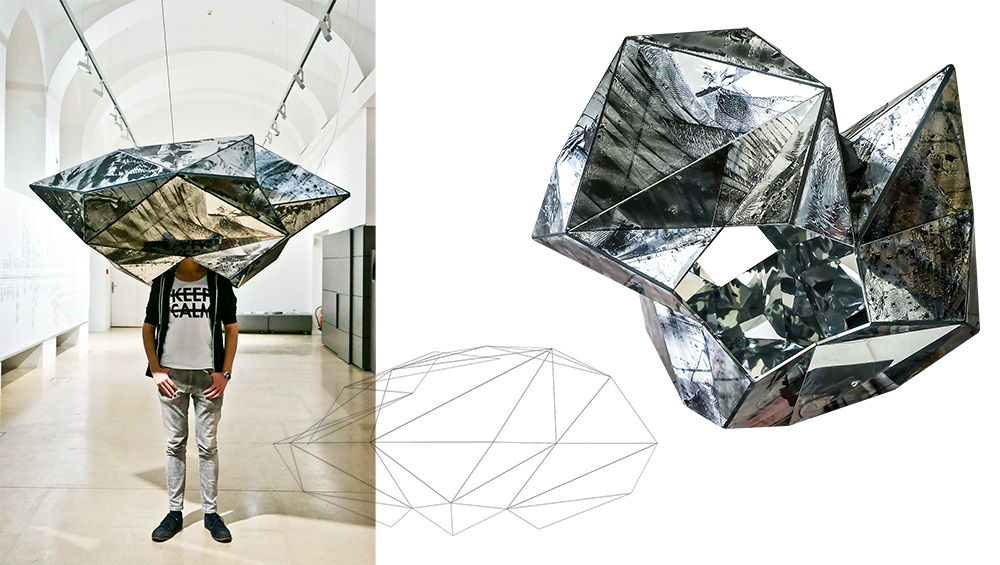
SINGULARIUM investigates this territory – an inverted crystal as a black box that immerses the visitors. In the encounter with their own external image, they experience, distanced and fragmentary, a "reality that is improbable" (Elena Esposito) yet becomes more concrete.
Text works
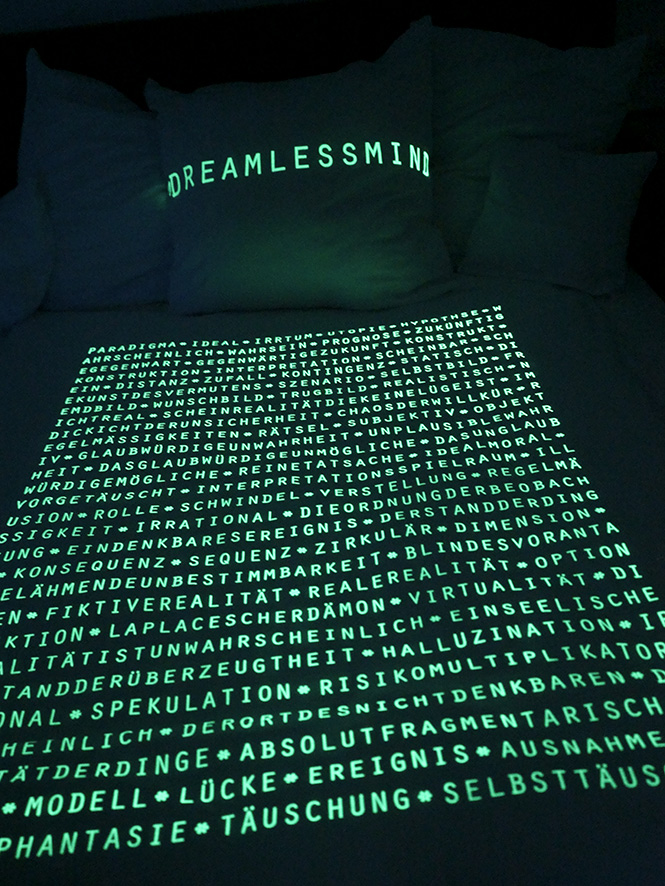
ADREAMLESSMIND
Serigraphy on bedlinen / phosphorescent pigment.
Installation for a hotel room, 2014
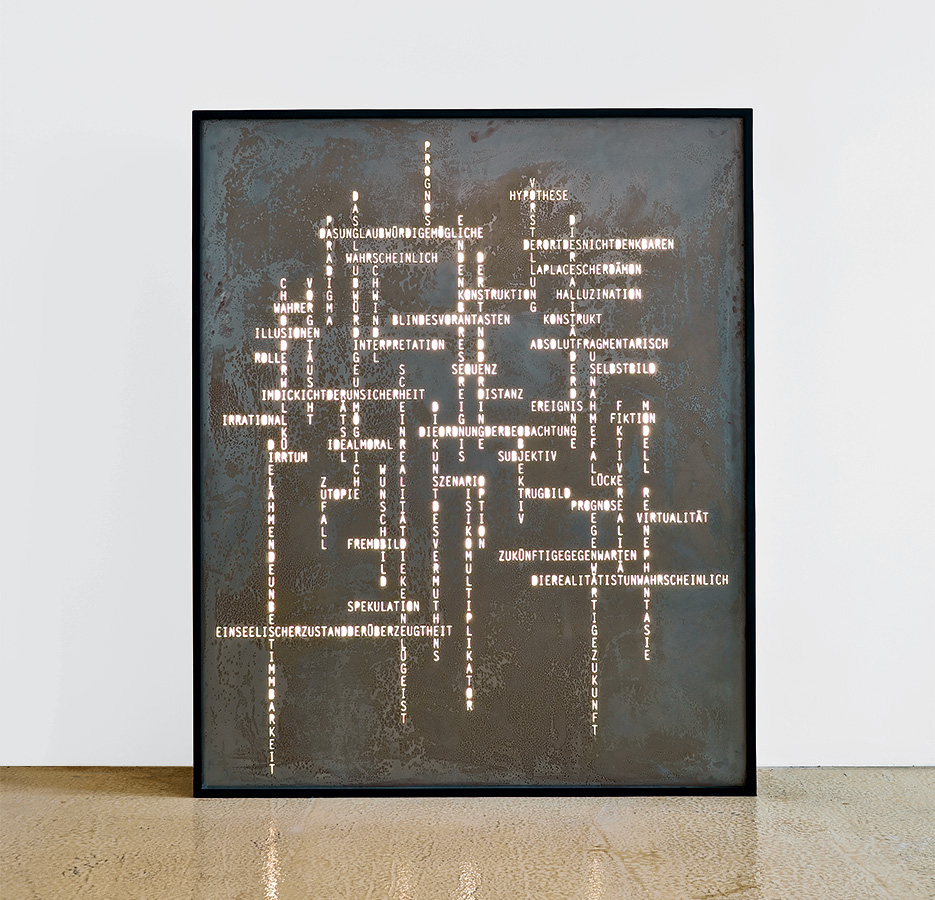
Kartografie des Unbestimmten
Leuchtkasten, Stahlplatte, Plexiglas, Holz, Neon.
Light box, steel, wood, acrylic glass, neon. 153 x 187 cm. 2012
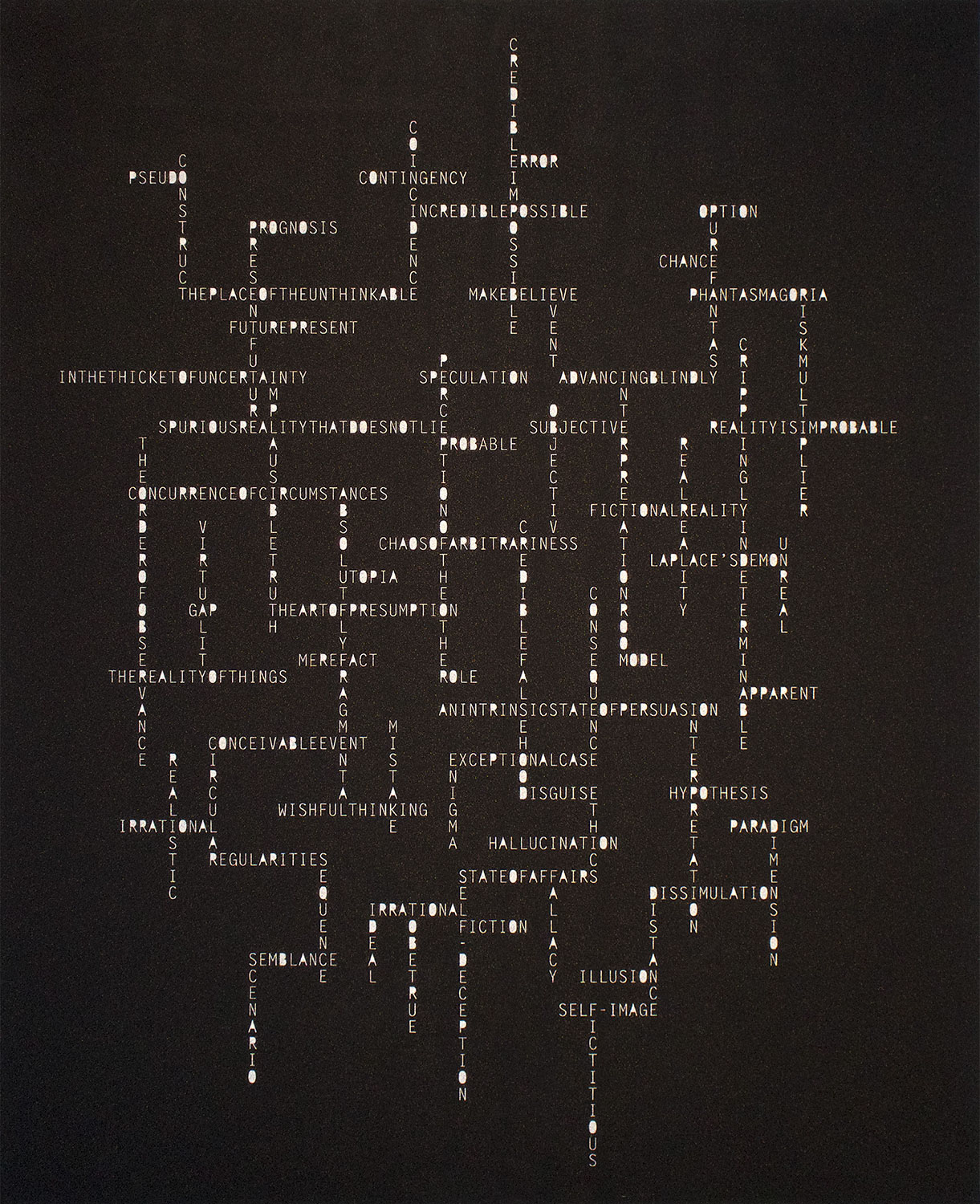
Cartography of the Intangible
Digital pigment print, wooden frame, 101.6 x 124.46 cm, 2013. Edition 5.
Installation
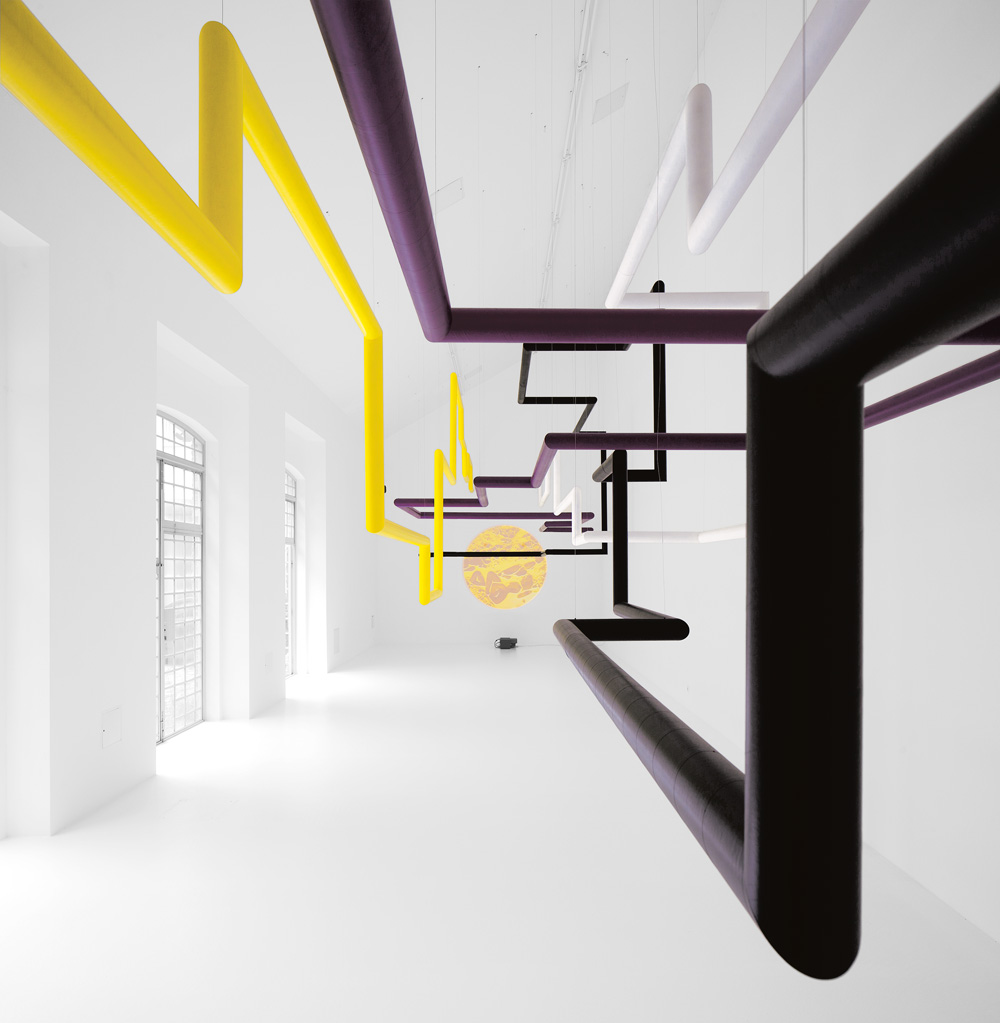
Digital Monsters Don't Bleed
Installation, spatial object, 1700 x 500, paper tubes, sound, video, 2 gold plated sculptures (15 x 50). 2014
The installation is a metaphoric/ metaphysical improvisation on the algorithm as the essential feature of a new cybernetic regime in a cyber-capitalist culture, rather than an attempt to visualize what is virtually impossible to reproduce. Thomas Mießgang
Video Installation
Crystal Math
With thousands of meters of nylon threat Sylvia Eckermann produced a spider web that serves as the captivating projection screen for her "expressive verbal image" (Sabine Dreher) with which she visualizes the replacement of human actors by algorithms in finance.
Referencing the fiber optic networks encroaching below ground level that connect the powerhouses of finance via inconspicuous Carrier Hotels, Crystal Math addresses the issue that human beings have become the resource of derivative risk potentials. Here, the net does not serve as a social realm of communication but rather as a trap in which pray gets caught, as the mathematics of probability calculation have turned into the drug of an oracle which subjects the manifold options of the future to its very own fictions. The voice of Simon Streather enunciates these bottomless pits put into words by Gerald Nestler. Sound by Szely.
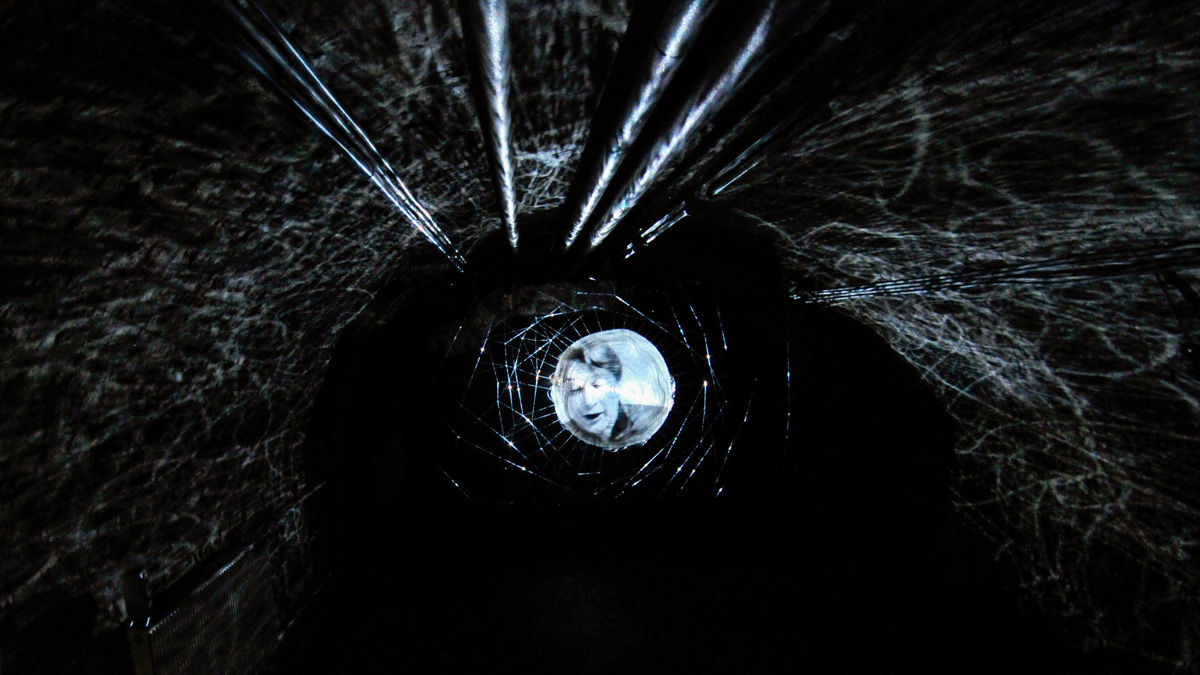
CRYSTAL MATH, 2012
1 channel video, room installation, 5.1 sound, 5000 m Nylon wire 300 x 200 cm
Video Objects
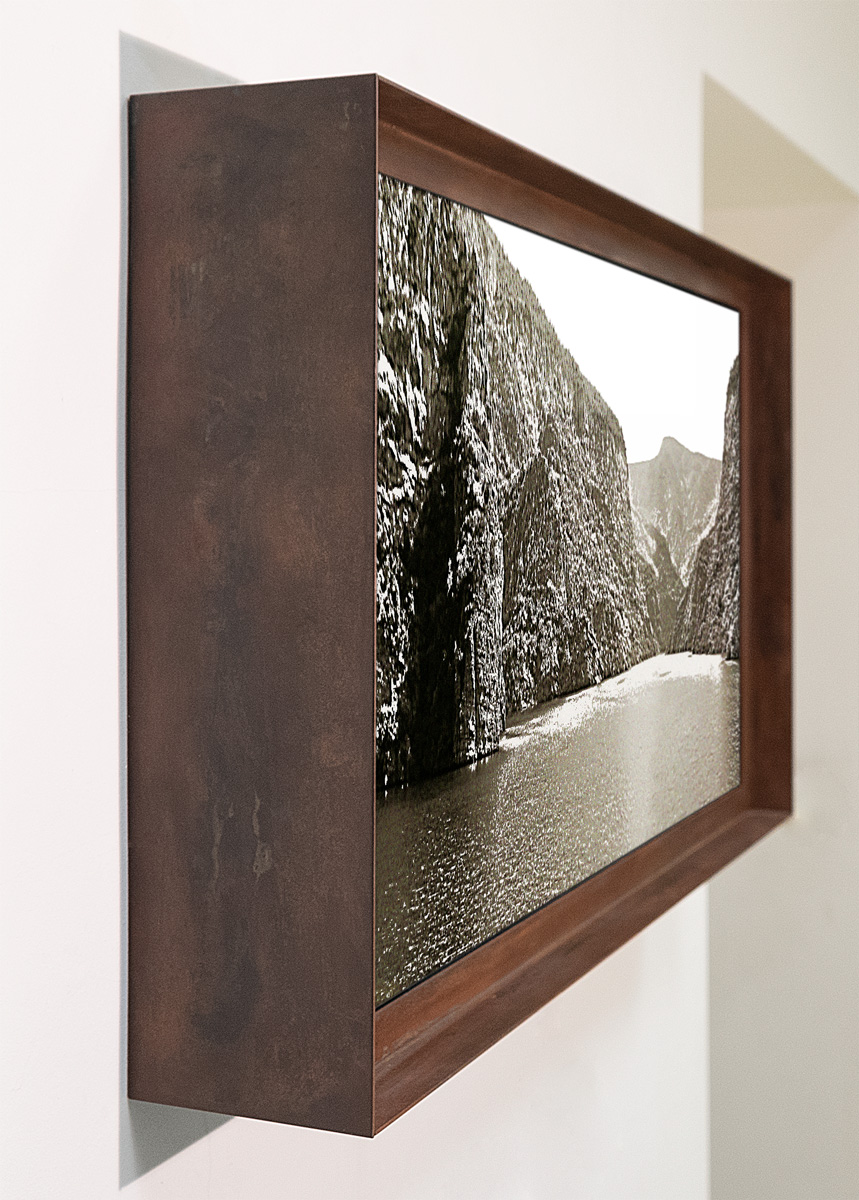
UPRIVER, 2015
Digital video, 30min loop, steal frame, AV player, monitor.
UPRIVER
a moving image landscape in the rhythm of the digital. 2015▸ Video
A secluded scenery in the mountains of Albania, a mythical, unknown land. No road cuts through nature, the river alone crosses the country connecting remote and widely separated villages. Without any sign of human life along the riverside, the camera flows with the waters through a scenery that hardly changes. The sunlight, at play with the surfaces it touches, bursts into digital refractions that dissolve solids into the immaterial epiphany of vision. The light we see is the gleaming artistic shadow of a past adventure. It immerses us in a timeless dreamscape in which digital imagination embraces ephemeral physicality.
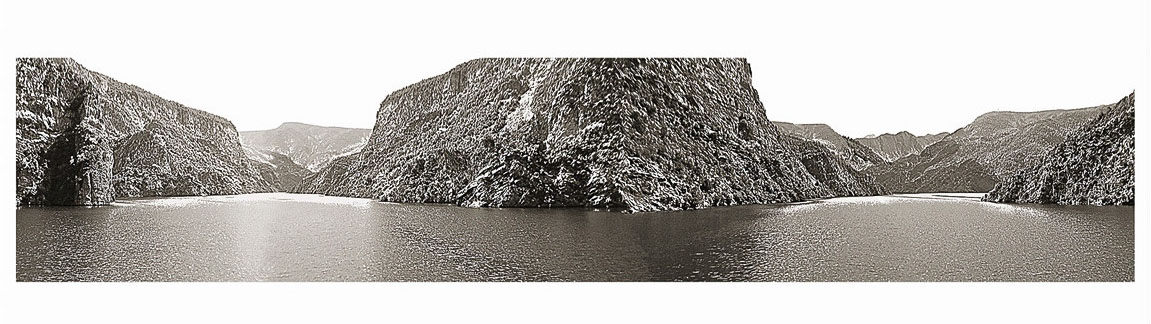
UPRIVER, Digital pigment print, 2015. size variable
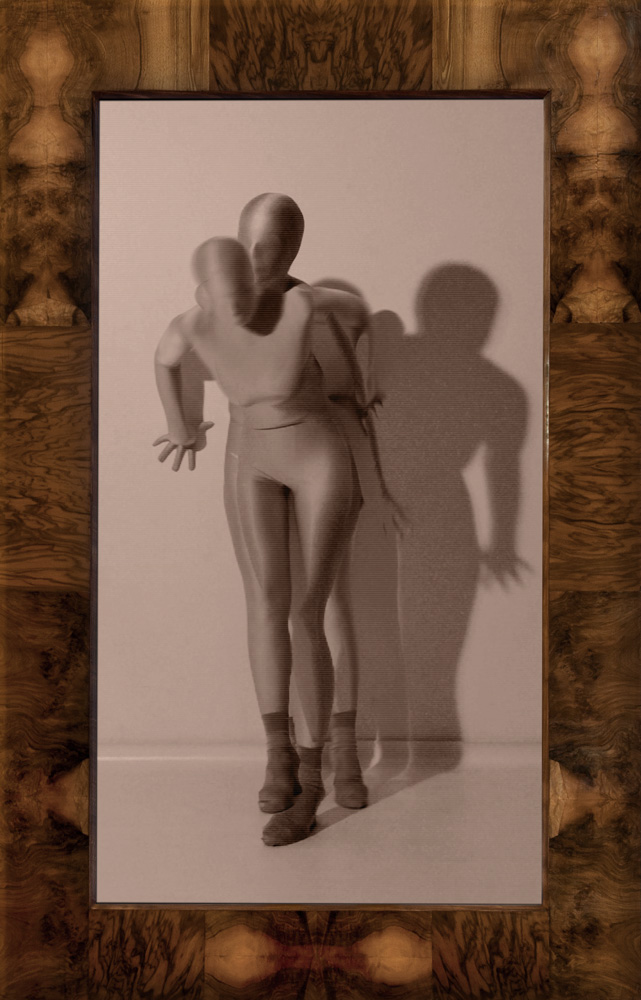
INTEGUMENT
Digital video /
computer animation,
wooden frame, monitor,
AV player, 100 x 160 cm. 2012
3D Animation
Telluric Force
Computer animation, stereo sound, plasma display, wooden frame, 90 x 150 cm. 2012
Telluric Force addresses a recent geological orientation that is rapidly gaining acceptance: human activity has been a driving geophysical force since the beginning of the industrial era. After millions of years, a biological actor thus entered the stage of the earth development whose environmental impact is of such significance that ecologists and geologists felt impelled to introduce a term for a new geological era: the Anthropocene. The core premise of the Anthropocene thesis is that human activity shapes nature. This term therefore heralds a paradigm shift in the natural sciences. Serving as a supplement to collective consciousness by conceptualizing an era of responsibility, it consequently requires new models for science, culture, politics, and everyday life.
The video work Telluric Force shows a mechanical metronome—a compound of the Greek words metron (measure) and nomos (law, consensus). The ticks of the swinging pendulum, however, are not regular pulses caused by the wound-up spring system. Telluric Force displays arrhythmic, non-metrical, and seemingly random amplitudes generated by a specific choreography created by the artist in collaboration with the composer Szely.
To visualize the new era of the Anthropocene, Eckermann replaced the metronome's musical frequency scale with a geologic time scale that includes the "metric" of human influence on the ecosystem. Thus, Telluric Force reflects a new order of time and nature whose complex, multifarious, and hence obscure "measures" are rendered audible by the amplified ticks of the metronome's pendulum. Even though these swings seem erratic, they are in fact constructed
Video / sound Installation
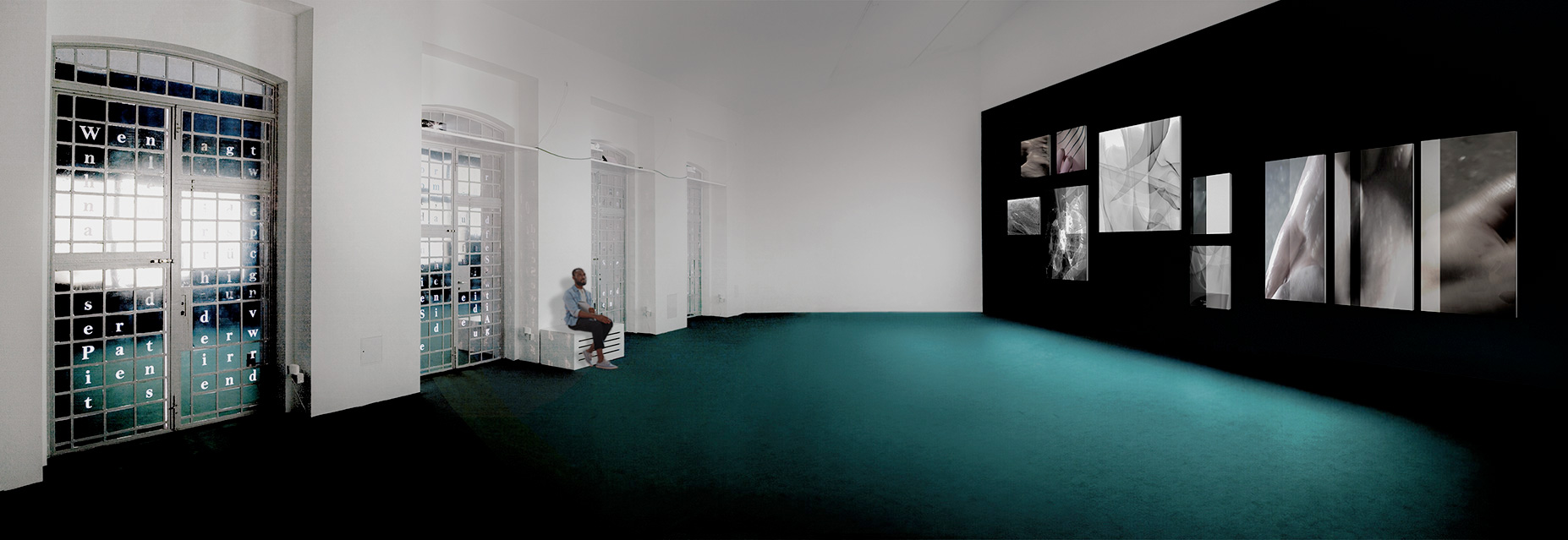
NAKED EYE, 2010. installaion view.
NAKED EYE
NAKED EYE, 2010. 3 channel video, 5.1 sound, 1500 x 470 cm. 10 projection objects, carpet, text work plotted on mirror foils.
Intangible Images
With her installation naked eye at Kunstraum Bernsteiner Sylvia Eckermann addresses the presentation of the "white cube" by subverting the boundaries between tableaux vivants and animated images, between the flat wall and a visual depth, between the visible and the audible space. The viewer is immersed into a space of vexed imagination that constantly changes its content, and disintegrates any type of narration and sensually reflects the familiar presentations of art and its many media. Text: Brigitte Felderer ▸ more
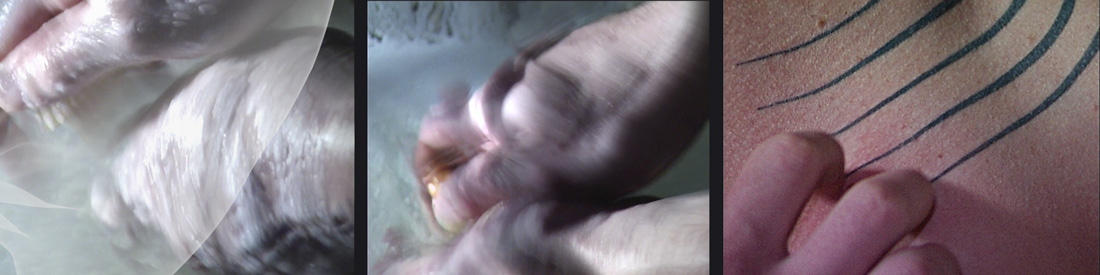
NAKED EYE, 2010. video stills.
Sculptures
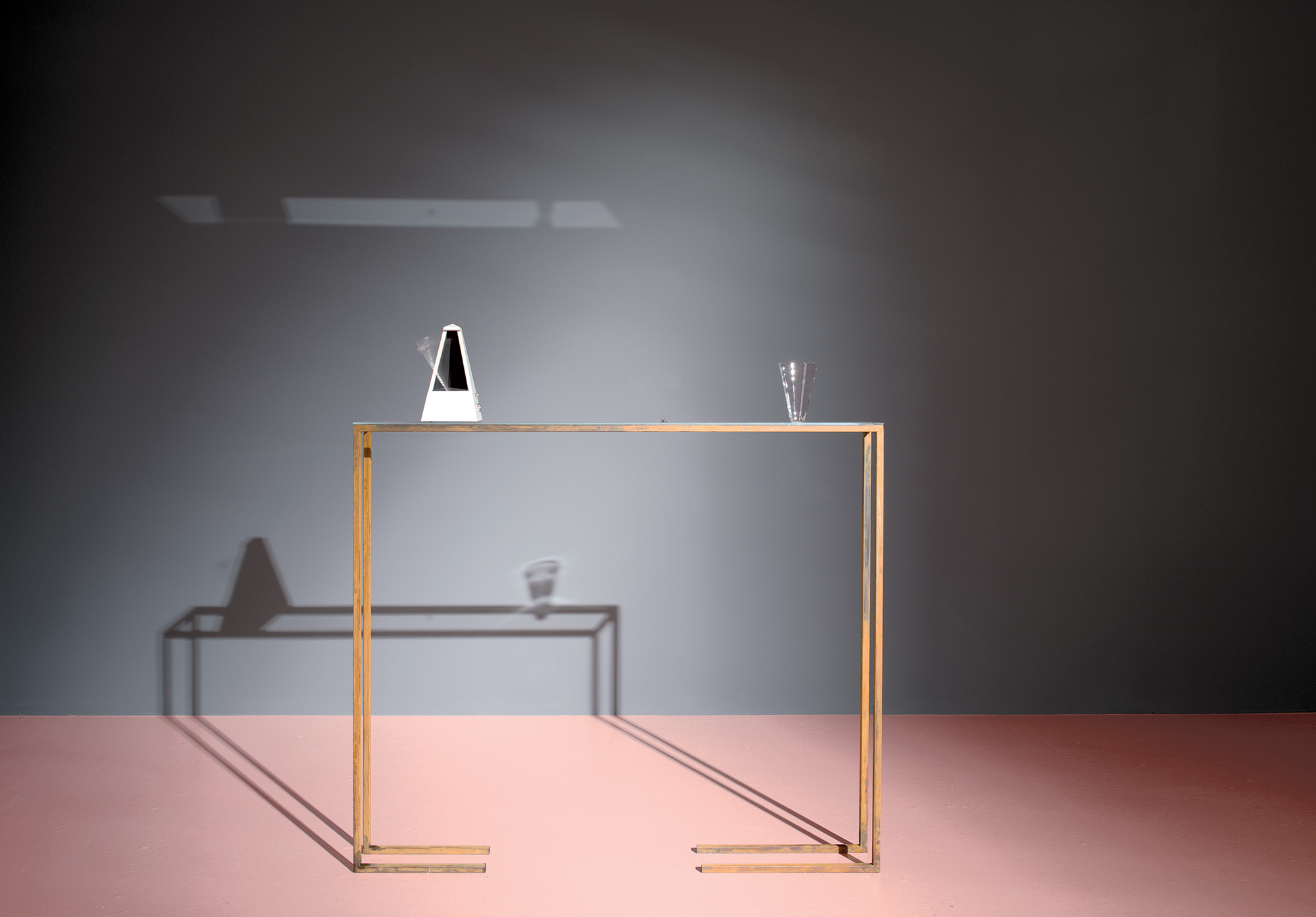
Zero Probability Event 2012
Iron construction, glass plate, glass cone, metronome, fly, 111 x 100 x 10 cm.Collection: Artothek des Bundes at the Belvedere 21
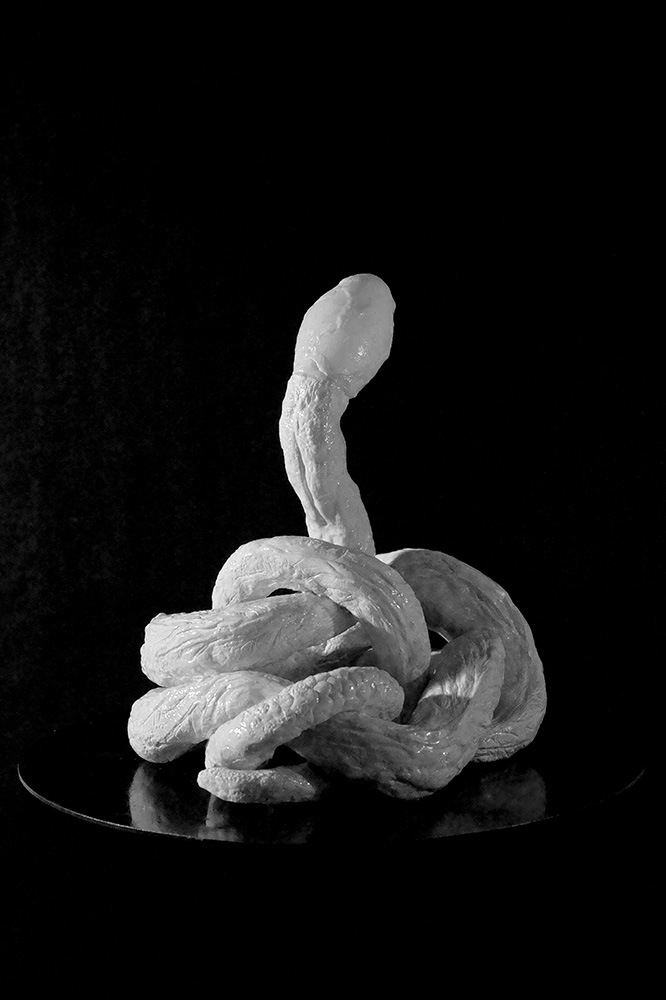
GLYCON 2014
Polymer, iron pedestal, 40 x 95 cm.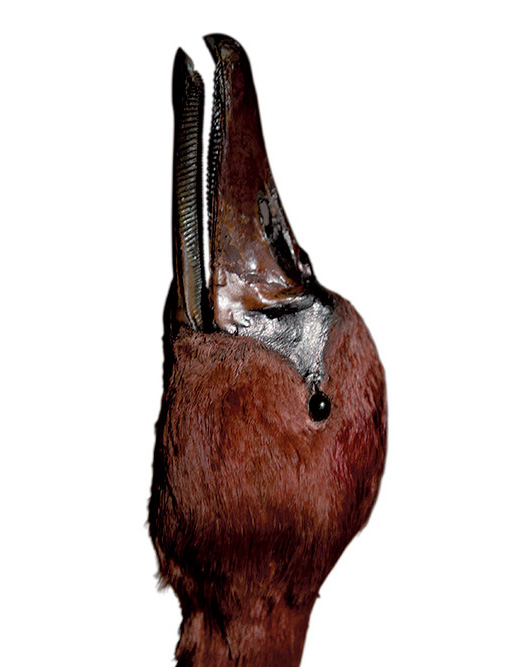
Table for my Father 2012
Wooden claw and ball table,
taxidermy of swans, 80 x 160 cm.
Wien Museum Collection / Sammlung Wien Museum
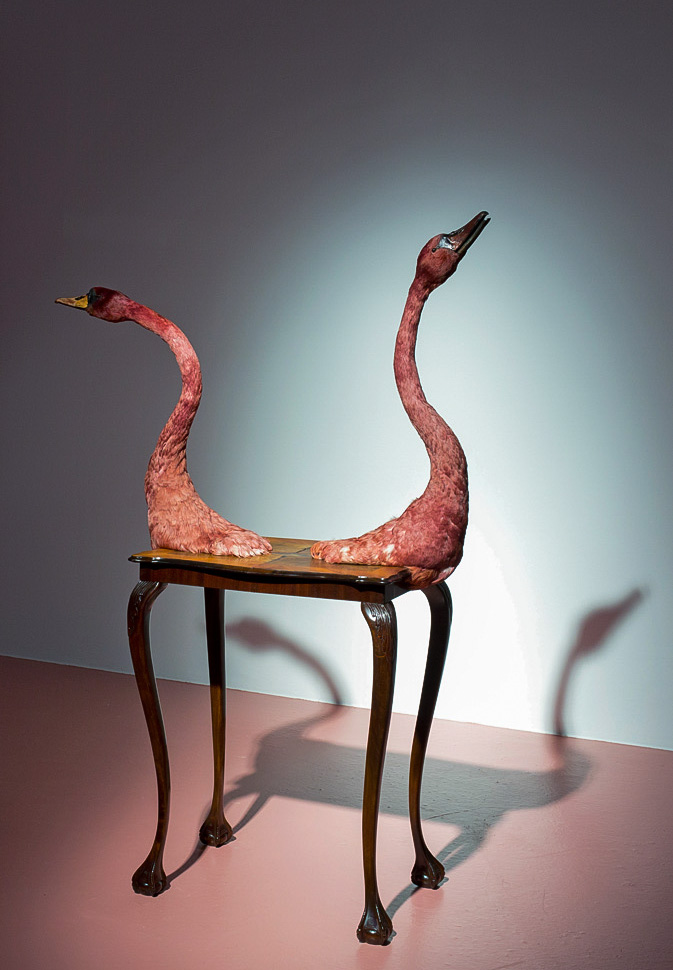
Table for my Father, 2012
Installation
Solo exhibition, 2012, Kunstraum Bernsteiner, Vienna AT
PROBABILIS
Sylvia Eckermanns Ausstellung Probabilis geht der Frage nach der Auseinandersetzung zwischen Wahrscheinlichkeit und Kontingenz nach. Während die Wahrscheinlichkeit ihren Blick in die Vergangenheit richtet, um eine Zukunft beschreiben zu können, trifft uns die Kontingenz unvermittelt und unvorhergesehen. Die in der Ausstellung zu sehenden Licht- und Textarbeiten, computergenerierten Bildwelten, Skulpturen und Objekte, ordnet sie zu einer inszenierten Raumkomposition an. Die einzelnen Objekte bezeichnet sie als freeze objects, die gleichsam ein im Moment eingefrorenes Ereignis manifestieren. Die Ausstellung interessiert sich für das Ereignis, das uns wie ein Schlag treffen kann, alles und nichts verändern kann, sich uns entzieht und zu einem Ort der absoluten Kontingenz werden kann (nach Quentin Meillassoux).Interactive Installation
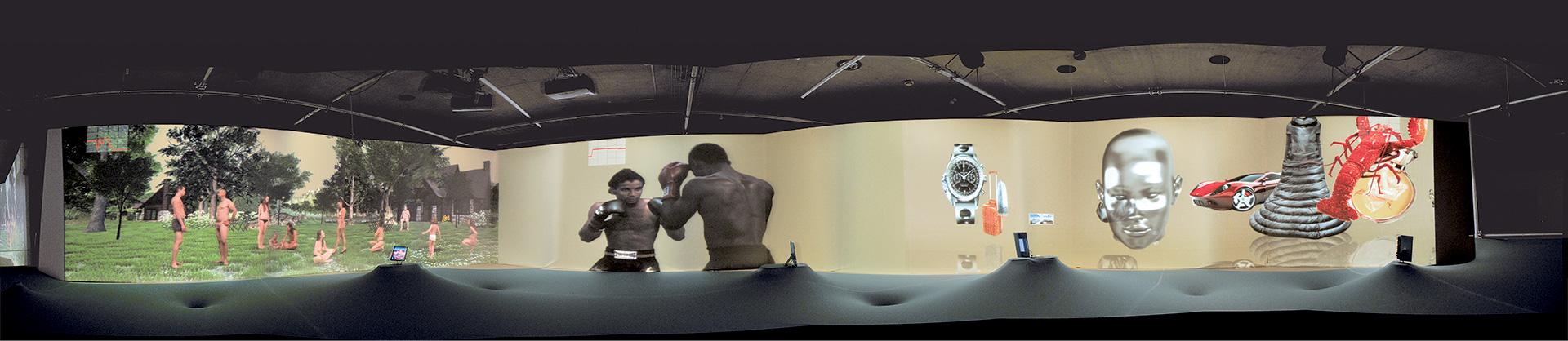
The Trend is Your Friend !
Performative and interactive artistic environment, 2009
Trends are all the trend. Alongside fashion and health it is analyses of economic trends and flows of finance and commodities which are shaping our environment. To what extent do they influence and change us as individuals and as a society? By recognising and relying on trends do we become part of an economisation that promises profit but at the same time absorbs us? Does the individual who opposes the trend get even socially marginalised? Is the titular "friend" in a knowledge-based society therefore an updated manifestation of what Orwell termed Big Brother? A new, if more complex uniformity of control that denies us future with its hubris of calculability?
The installation "The Trend Is Your Friend" invites us to participate in an experimental set-up of markets to think through these questions for ourselves. With the aid of our senses, we dive into a playful environment in virtual space while our bodies remain in the real.
The Trend Is Your Friend, video documentation, steirischer herbst, 2009.
(in German)
Video
Breathe My Air , Video HD, 01:58:14
Breathe My Air —
a paradoxical conversation piece
2008
Filmed and edited by
Sylvia Eckermann and Gerald Nestler.
Wien Museum Collection / Sammlung Wien Museum
3-channel video, duration: 01:58:14
Languages: English, German and Chinese
Subtitles: English and Chinese
Filmed at locations in Beijing, Chengdu, Shanghai, Western Sichuan, Northern Yunnan, Krems, Stopfenreuther Au and Vienna.
Interactiv Installation / virtual knowledgespace
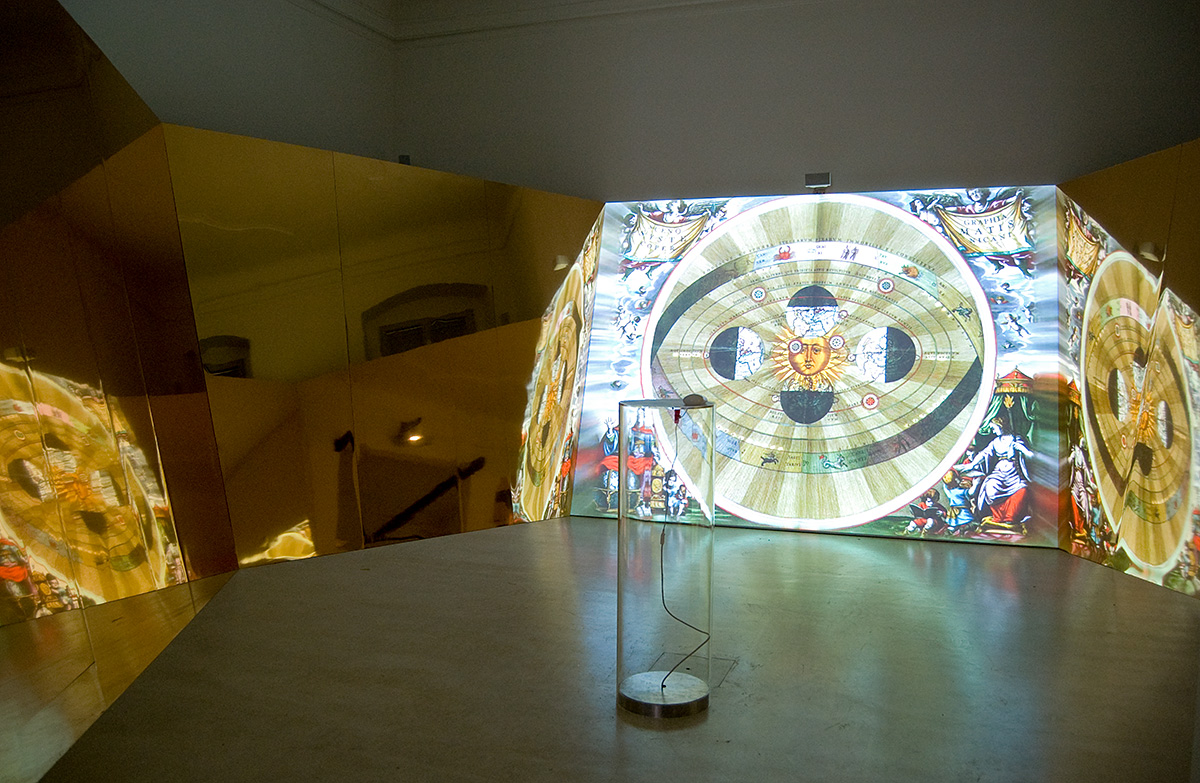
In Ninth Heaven or The Far End of Europe
— In Ninth Heaven is based on a 3D real-time display system (Unity) integrated in a specially designed architecture. Artistic Research: Gerald Nestler, Composition and spatial acoustics: Peter Szely. Programing: Doron Goldfarb. Installation at the Museum Stein, Krems-Stein AT,
Sep 2008 - Sep 2009, curated by Dieter Buchhart.
Interactive Light Installation
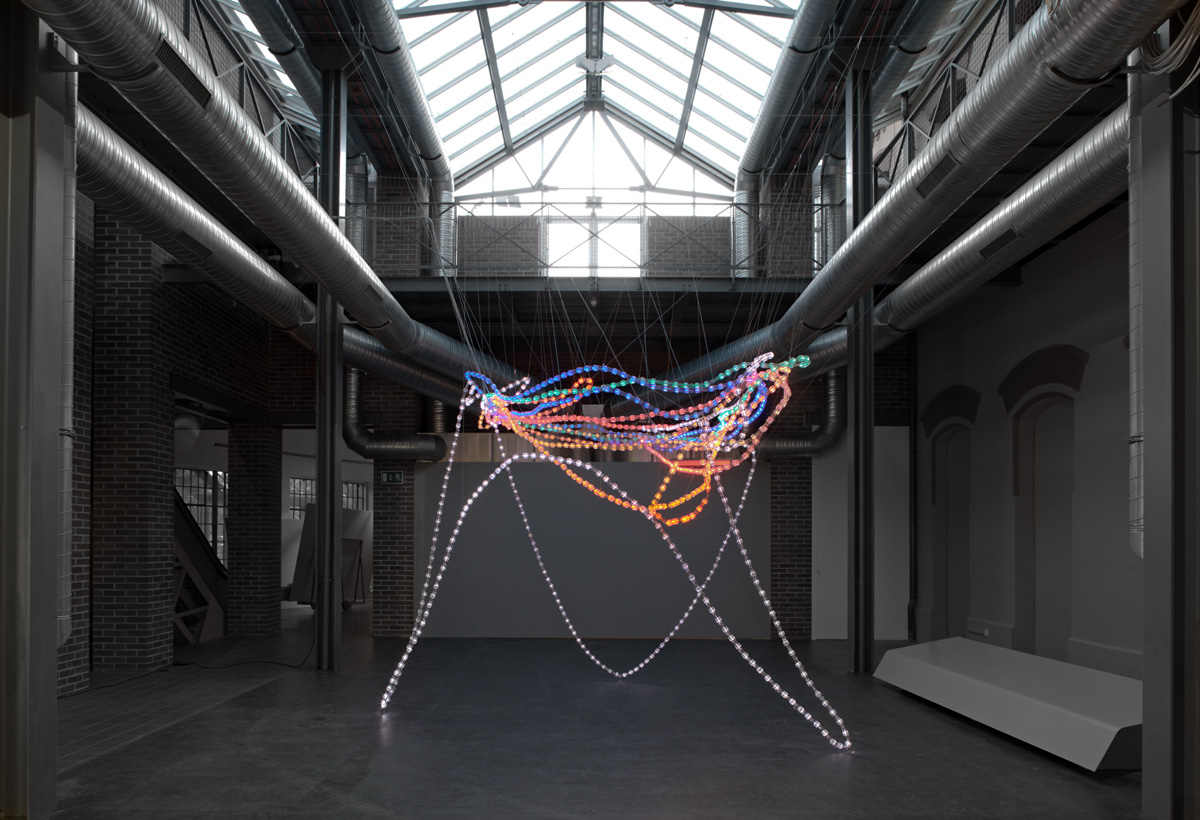
PLASTIC TRADE-OFF
Meta-performative game in real time – intervention in global financial markets and exchanges. In artistic cooperation with Gerald Nestler. 2006
Plastic Trade-off was realized in 2006 as a permanent installation for WORKING–WORLD.NET, Working and Living in Globalization, Museum Arbeitswelt, Steyr, Austria.
Specifications: Size: 370 x 400 x 380 cm, 7 light strings composed of 1500 LEDs in different colors, mounted inside acrylic glass discs, 4 light strings with flashing lights running in both directions with variable speeds, 2 light strings, pulsating, 1 with variable speed, 1 light string, static light, Structural framework and data/power lines (4mm insulated copper wire) are identical.
Interactiv Installation
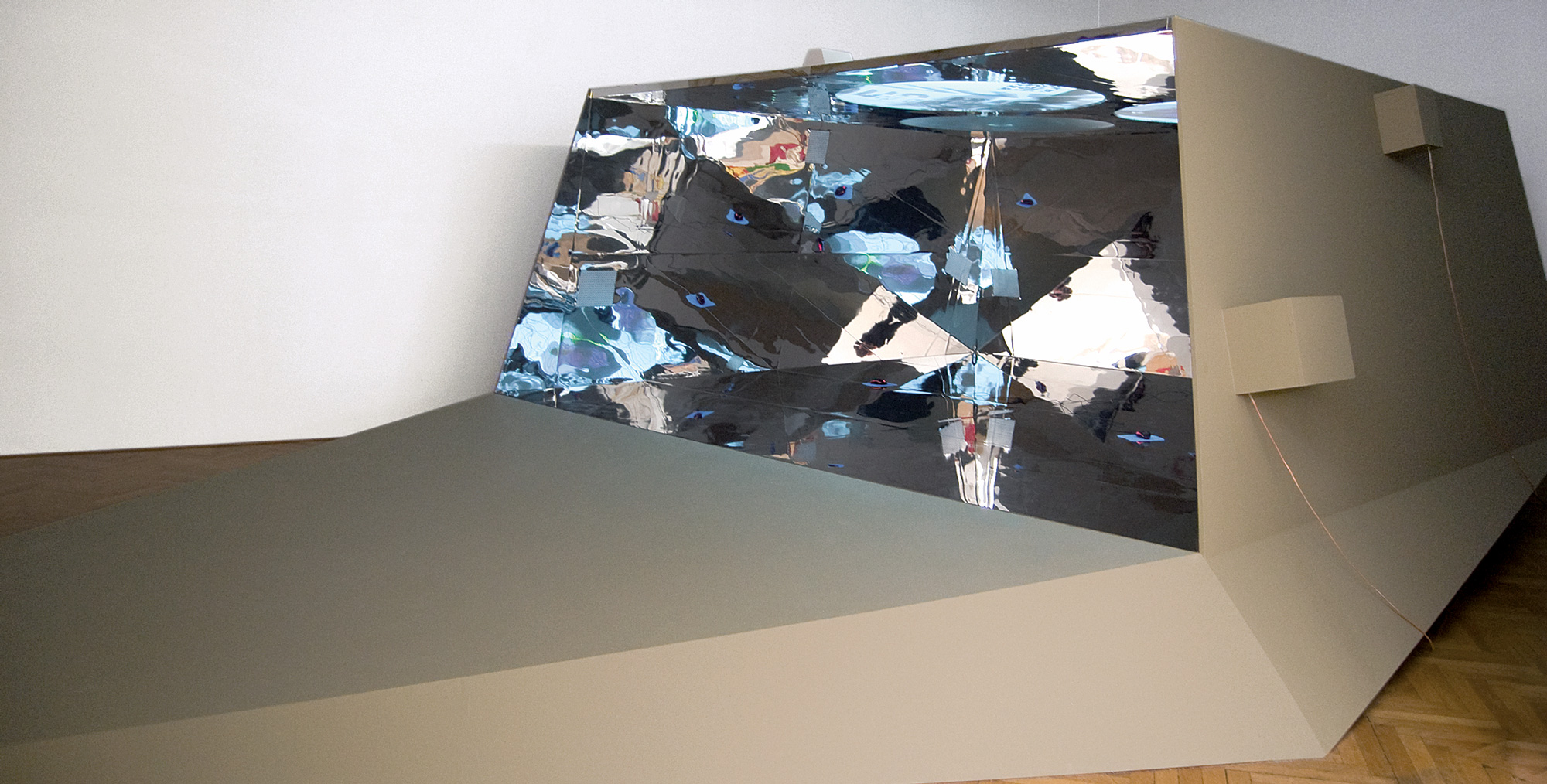
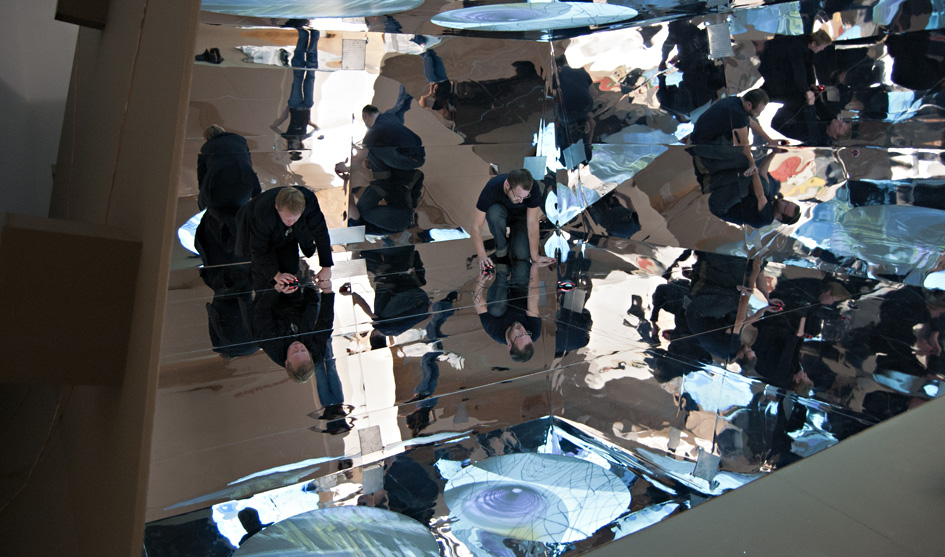
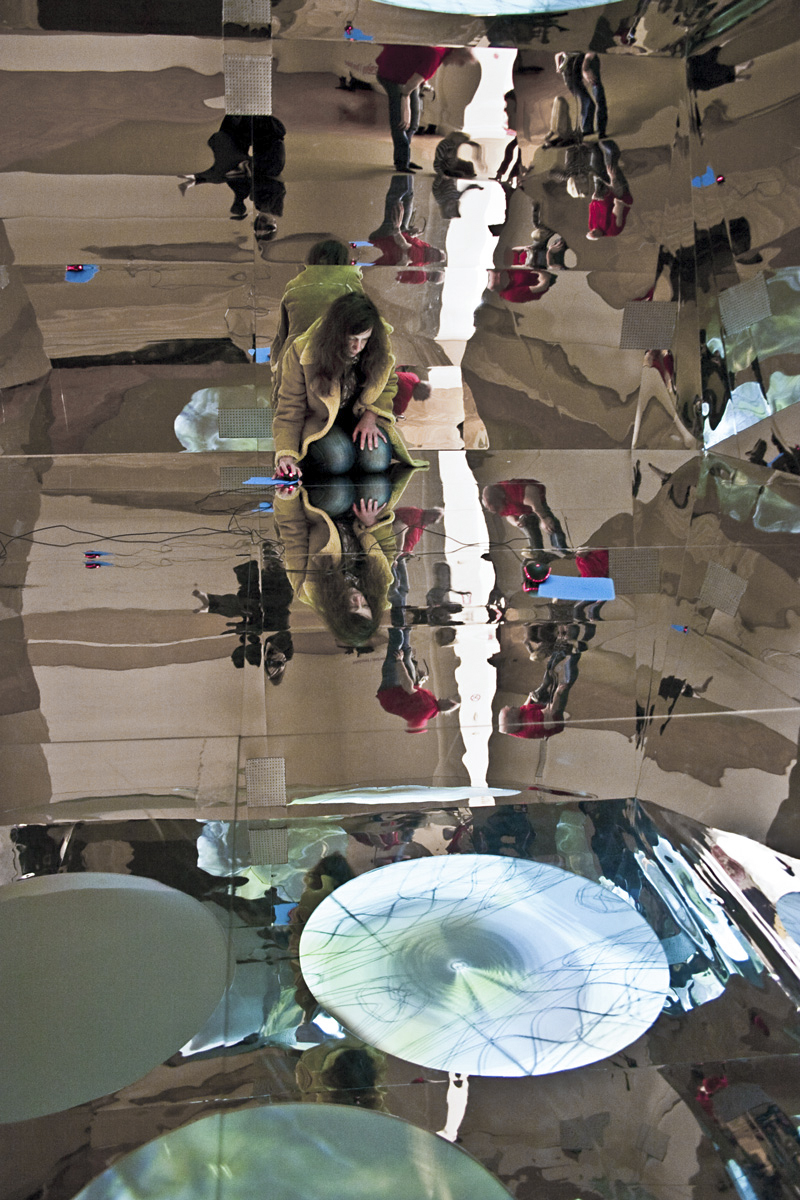
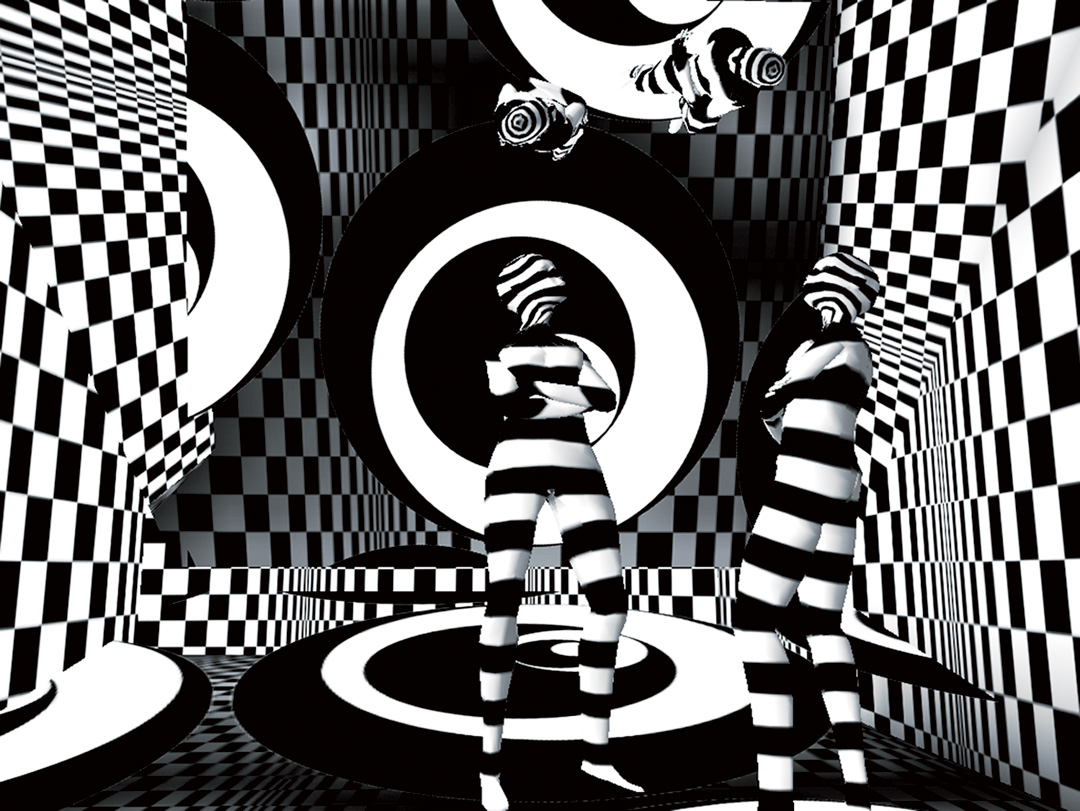
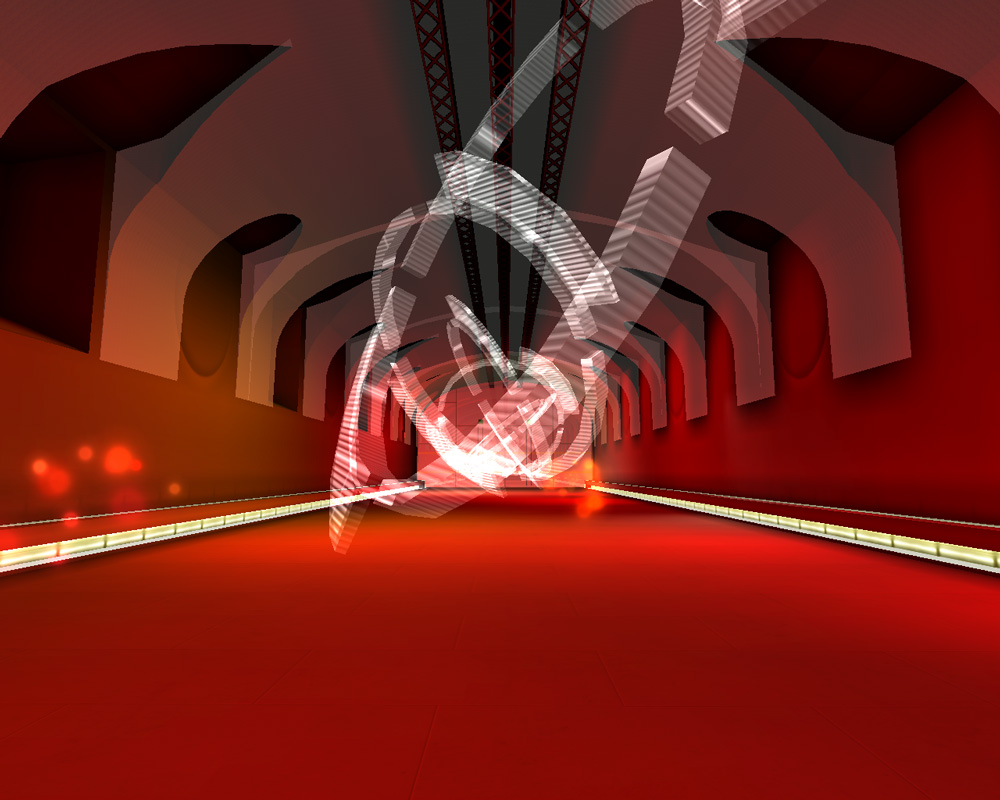
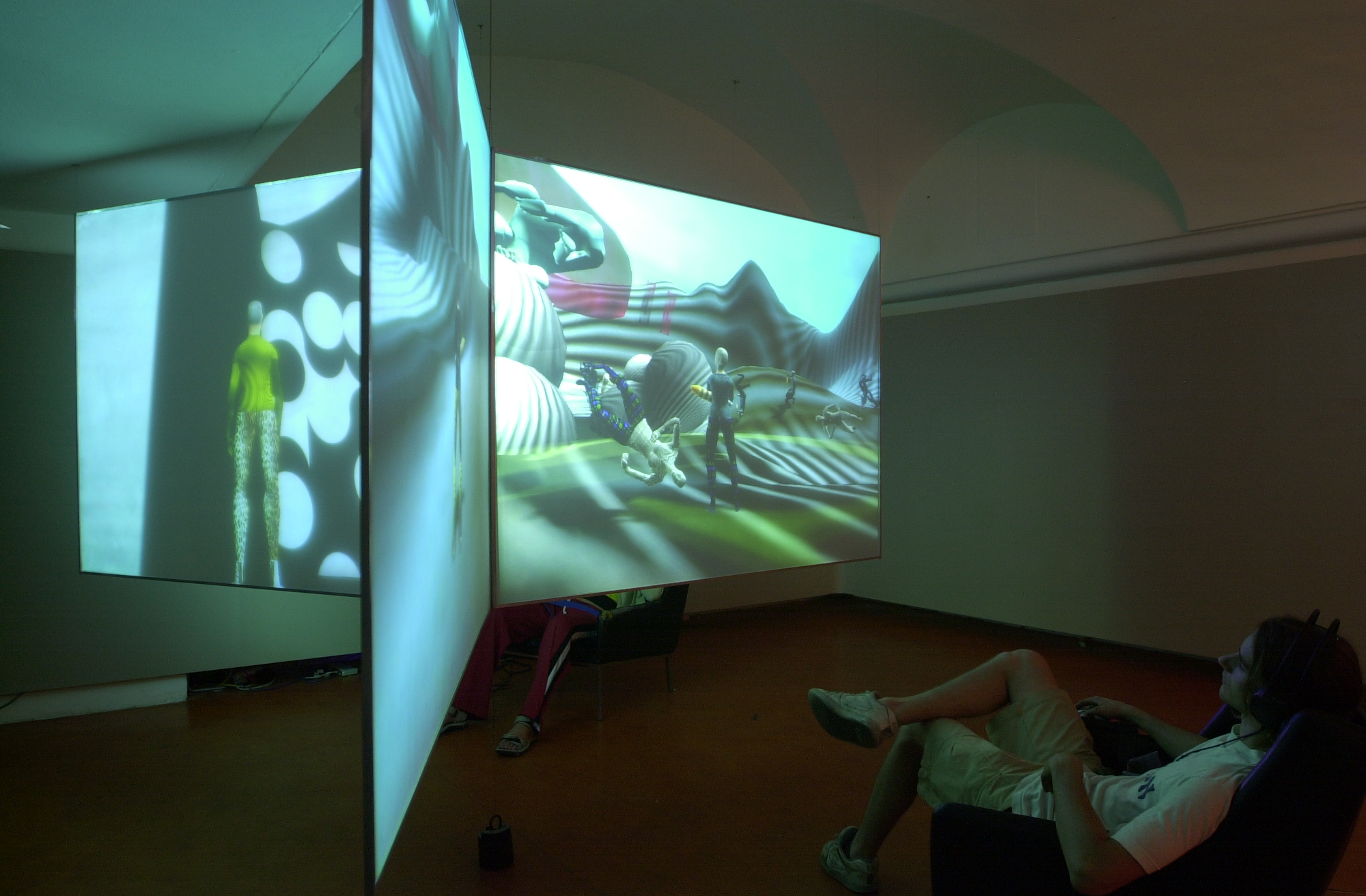
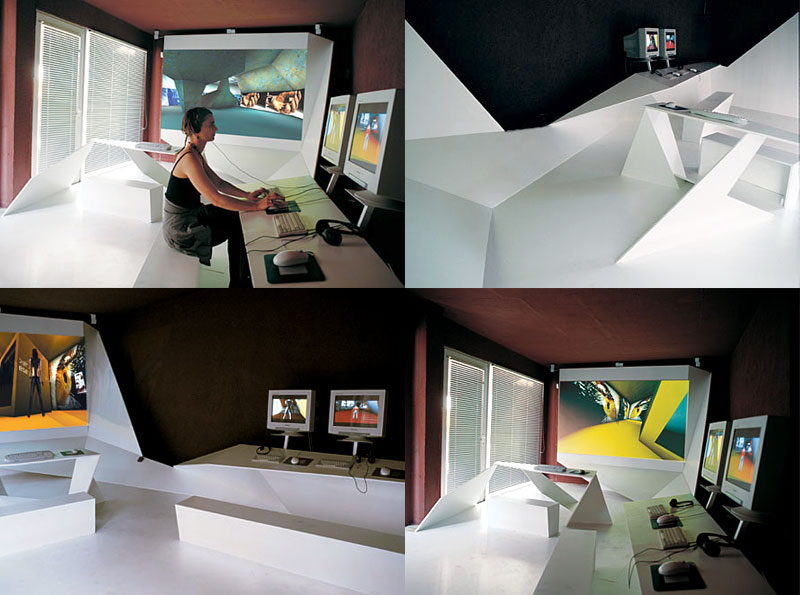
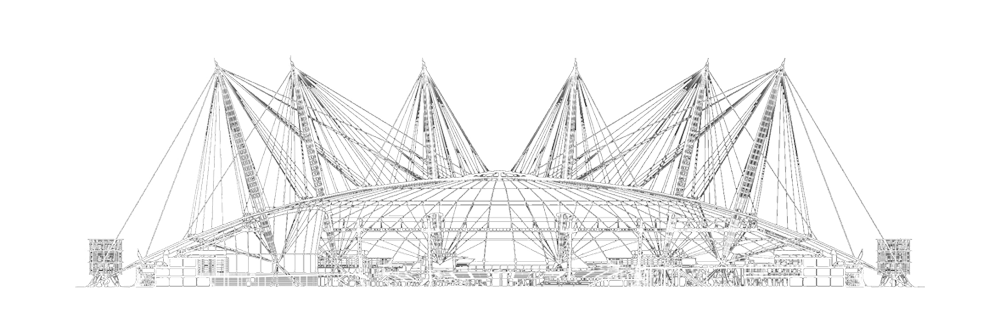
MIRROR CELLS | Spiegelzellen
Mirror Cells is an interactive installation that turns around our perception of space and time.
The gamers as well as the visitors are immersed inside an infinitely mirrored acousmatic-visual 3d-world.
Featured project of ars electronica 2007.
Accessible immersive environment. Unreal Mod.
 ▸ more